

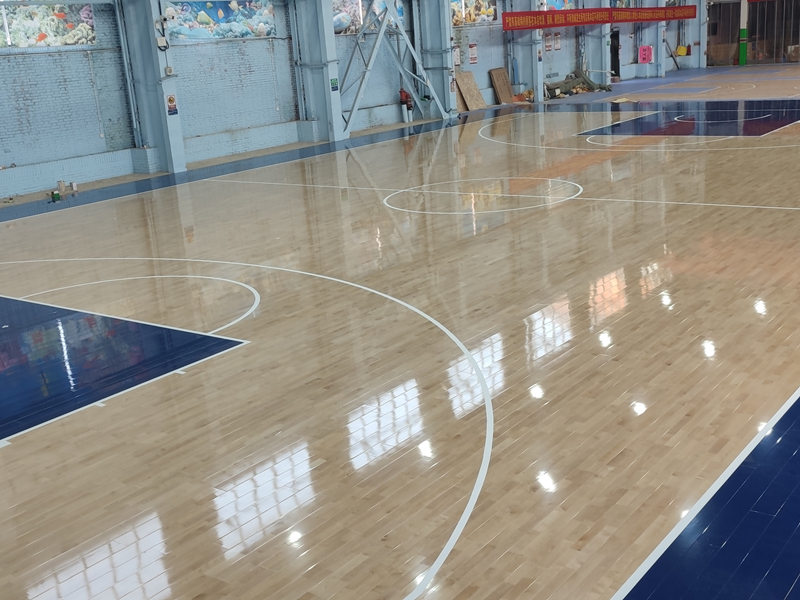
Owning an indoor basketball court with hardwood flooring is a long-term commitment. The floor is not a "set it and forget it" investment — it requires consistent, proper maintenance to perform at its best and to last for decades. This guide covers everything from daily cleaning to periodic recoating, helping you protect your investment and keep your court in top condition.
Daily Maintenance: The Foundation of Longevity
The most important aspect of hardwood floor maintenance is daily care. Every day, the floor should be swept or dust-mopped to remove dirt, dust, and debris. These particles act as abrasives on the finish, gradually wearing it down and creating a dull, rough surface. A microfiber dust mop is ideal for this task, as it traps fine particles more effectively than a traditional broom.
Spills must be cleaned up immediately. Water, sports drinks, and other liquids can seep into the seams between planks and cause the wood to swell, warp, or stain. Even a small amount of standing water left overnight can cause damage. A dry mop or towel should be used to absorb any liquid, followed by a slightly damp mop to clean the area.
For deeper daily cleaning, a neutral pH cleaner specifically designed for hardwood floors should be used. Harsh chemicals, ammonia-based cleaners, and vinegar should be avoided, as they can strip the finish or damage the wood.
Weekly and Monthly Maintenance
In addition to daily sweeping, the floor should be mopped weekly with a hardwood-specific cleaner. This removes any grime that has accumulated beyond what daily sweeping can handle. Monthly inspections should be conducted to check for any signs of wear, scuffing, or damage. Pay special attention to high-traffic areas such as the free-throw lane, the key, and the sidelines, as these areas wear faster than the rest of the court.
Recoating: The Periodic Refresh
Over time, the polyurethane finish on the floor will wear down. This is a natural process, and it does not mean the floor needs to be replaced. Instead, the finish can be recoated — a process that restores the protective layer without removing any wood.
Recoating is typically needed every three to five years, depending on traffic levels. The process involves screening the floor with a specialized machine that removes the old finish and lightly sands the surface. The floor is then cleaned, and a fresh coat of polyurethane is applied. Two to three coats are usually sufficient.
Recoating is significantly less expensive than a full sanding and refinishing, and it can be completed in a single day, minimizing downtime for the court.
Full Sanding and Refinishing: The Major Overhaul
Every 10 to 15 years, depending on wear, the floor may need a full sanding and refinishing. This is a more intensive process that involves removing the old finish and a thin layer of wood (typically 1/32 to 1/16 inch) to expose fresh, undamaged wood. The floor is then sanded smooth and refinished with multiple coats of polyurethane.
This process can extend the life of the floor by another 10 to 15 years. It is more expensive than recoating and requires the court to be out of service for several days, but it is far less costly than replacing the entire floor.
Preventive Measures
Several preventive measures can help extend the life of your hardwood floor. Requiring players to wear clean, non-marking shoes reduces the amount of dirt and debris tracked onto the court. Placing mats at all entrances captures moisture and dirt before it reaches the floor. Maintaining a consistent indoor climate — ideally between 60 and 80 degrees Fahrenheit with 30 to 50 percent relative humidity — prevents the wood from expanding, contracting, or cracking.
The Cost of Neglect
Neglecting hardwood floor maintenance is not a cost-saving measure — it is a cost-creating one. A well-maintained court can last 30 to 40 years. A poorly maintained court may need replacement in 10 to 15 years, at a cost of tens of thousands of dollars. The daily and weekly maintenance tasks described above take only minutes but can save you enormous sums over the life of the floor.
Leave a Reply