

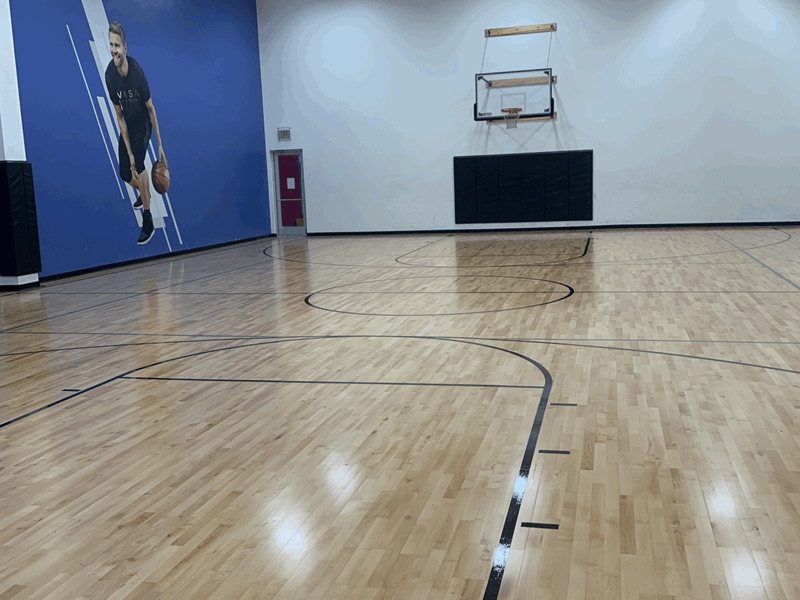
A basketball court wood floor is a significant investment, and like any investment, it requires proper care to protect its value and performance. Neglecting maintenance is the number one reason why basketball court floors deteriorate prematurely. In this ultimate maintenance guide, we will cover everything you need to know to keep your court looking and performing like new for decades.
Daily Maintenance (Every Game Day)
- Sweep or Dry Mop: Before and after every game or practice, the floor should be swept or dry-mopped to remove dust, dirt, and debris. This is the single most important daily task.
- Wet Mop: After dry mopping, the floor should be wet-mopped with a damp (not soaking wet) mop. Use a pH-neutral sports floor cleaner. Never use excessive water — too much moisture is the enemy of wood flooring.
- Spot Clean Spills: Any spills (water, Gatorade, etc.) should be cleaned up immediately to prevent moisture from seeping into the wood.
- Check for Debris: Look for any debris on the floor (gum, tape, stones, etc.) and remove it immediately. Even small pieces of debris can cause scratches or affect ball bounce.
Weekly Maintenance
- Deep Clean with Sports-Specific Cleaner: Use a cleaner specifically designed for sports wood floors. These cleaners are formulated to remove built-up sweat, oil, and grime without damaging the finish.
- Inspect the Finish: Look for any areas where the finish is wearing thin or becoming slippery. These areas should be spot-recoated as needed.
- Check Humidity and Temperature: Verify that the gymnasium's HVAC system is maintaining the recommended conditions (60-70°F, 35-50% RH).
Monthly Maintenance
- Full Floor Inspection: Walk the entire floor and look for:
- Scratches or gouges
- Loose or damaged planks
- Areas where the finish is worn
- Signs of moisture damage (cupping, warping, discoloration)
- Touch-Up Repairs: Minor scratches can be filled with a wood filler and sanded smooth. Damaged planks should be replaced as soon as possible to prevent further damage.
Annual Maintenance (The Big One)
- Sanding and Refinishing: This is the most important annual task. The floor should be sanded with a 100-120 grit screen to remove the top layer of finish and any built-up grime. Then, 5-8 coats of sports-grade polyurethane finish are applied, with light sanding (120-150 grit) between each coat.
Signs that your floor needs refinishing:
- The ball bounce is inconsistent
- The finish looks dull or worn
- Players are slipping more than usual
- There are visible scratches or scuff marks
- Line Repainting: Court lines fade over time and should be repainted annually to maintain visibility and accuracy.
- Cushion System Inspection: Check the shock pads for signs of compression or deterioration. If the shock absorption has dropped below the required standard, the pads should be replaced.
Every 5-10 Years: Major Refinishing
In addition to the annual light sanding, the floor will need a major refinishing every 5-10 years. This involves:
- Full Sanding: The floor is sanded down to bare wood (usually 36-40 grit, then 60-80 grit, then 100-120 grit).
- Gap Filling: Any gaps between planks are filled with wood filler.
- Full Refinishing: 8-10 coats of finish are applied.
This process restores the floor to like-new condition and typically costs 3,000−8,000 per court.
Common Mistakes to Avoid
| Mistake | Why It's Bad | What to Do Instead |
|---|---|---|
| Using too much water | Causes wood to swell, warp, and delaminate | Use a damp mop, not a wet mop |
| Using household cleaners | Can damage the finish and make the floor slippery | Use sports-specific cleaners only |
| Not acclimating shoes | Street shoes can track in dirt and damage the finish | Require clean basketball shoes |
| Ignoring humidity | Leads to expansion, contraction, and damage | Maintain 35-50% RH at all times |
| Skipping annual refinishing | Leads to inconsistent bounce and slippery surface | Refinish at least once per year |
Conclusion
Maintaining a basketball court wood floor is not difficult, but it does require consistency and attention to detail. By following this maintenance guide, you can extend the life of your floor to 30-50 years and ensure that it always performs at its best. Remember: a well-maintained floor is a safe floor, and a safe floor is a winning floor.
Leave a Reply