

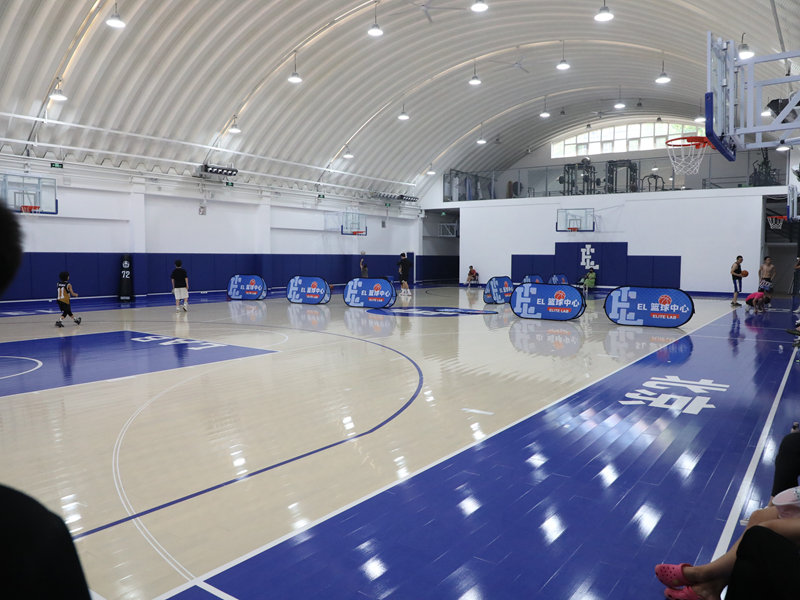
Basketball is a year-round sport, and many players want the option to play outdoors as well as indoors. This raises an important question: can you use wooden flooring for outdoor basketball courts, and how does it compare to indoor wooden flooring? In this article, we will explore the differences between indoor and outdoor basketball court wooden flooring, including the materials, construction, maintenance, and performance considerations for each.
Indoor Wooden Flooring: The Standard
Indoor basketball court wooden flooring is what most people think of when they imagine a basketball court. It is typically made from hard maple or red oak, installed over a concrete subfloor with a multi-layer engineered system. The environment is controlled, with consistent temperature and humidity, which allows the wood to perform at its best.
Indoor wooden floors are finished with polyurethane or water-based polyurethane coatings that protect the wood from moisture, scuffs, and wear. The finish also provides the optimal level of gloss and traction for basketball play. Indoor courts are used year-round in climate-controlled facilities, so the floor does not need to withstand extreme weather conditions.
The performance of an indoor wooden floor is unmatched. The ball bounce is consistent, the traction is excellent, and the shock absorption protects players' joints. This is why all professional and collegiate basketball is played on indoor wooden courts.
Outdoor Wooden Flooring: A Different Challenge
Outdoor basketball court wooden flooring faces a completely different set of challenges. The wood must withstand rain, snow, UV radiation, extreme temperatures, and humidity fluctuations. These conditions can cause wood to warp, crack, split, and rot if the proper precautions are not taken.
To address these challenges, outdoor basketball court flooring uses modified wood products that are specifically designed for exterior use. The most common options are thermally modified hardwood, composite wood, and acrylic-coated hardwood.
Thermally modified hardwood is real wood that has been heated to extremely high temperatures (around 200 degrees Celsius) in a controlled environment. This process changes the chemical structure of the wood, making it more resistant to moisture, rot, and insect damage. Thermally modified maple is an excellent choice for outdoor courts, offering the look and feel of real hardwood with enhanced durability.
Composite wood is a blend of wood fibers and plastic or resin. It is completely waterproof and does not warp, rot, or splinter. However, it does not provide the same ball bounce or feel as real hardwood, and many players find it less enjoyable to play on.
Acrylic-coated hardwood is real wood that has been treated with a special acrylic coating that protects it from moisture and UV damage. This option provides the best balance of performance and durability for outdoor courts, but it is also the most expensive.
Performance Comparison
When it comes to performance, indoor wooden flooring is clearly superior. The controlled environment allows the wood to maintain its optimal moisture content, resulting in the best possible ball bounce, traction, and shock absorption. Outdoor wooden flooring, even with modifications, cannot quite match this level of performance.
The ball bounce on an outdoor wooden court can be affected by moisture and temperature changes. After rain, the surface may be slightly slippery, and in extreme heat, the wood may expand and affect the bounce. These variations are generally minor and acceptable for recreational play, but they would be unacceptable for professional competition.
Maintenance Differences
Indoor wooden courts require daily sweeping and mopping, regular humidity control, and periodic refinishing every 3 to 5 years. The maintenance is relatively straightforward because the environment is controlled.
Outdoor wooden courts require more frequent and intensive maintenance. They need to be cleaned regularly to remove dirt, leaves, and debris. The finish or coating may need to be reapplied every 1 to 3 years, depending on the product and the climate. In areas with heavy rainfall or snow, the court may need to be covered or drained to prevent water damage.
Cost Comparison
Indoor wooden flooring is expensive, with professional-grade hard maple courts costing 50,000 to 150,000 dollars or more. Outdoor wooden flooring is generally less expensive than indoor, with thermally modified hardwood courts costing 20,000 to 60,000 dollars. Composite wood courts are the most affordable option, typically costing 15,000 to 40,000 dollars.
Making the Right Choice
If you are building a facility for professional or collegiate play, an indoor wooden court is the only viable option. The performance advantages are too significant to ignore.
For recreational facilities, community parks, or schools, both indoor and outdoor wooden courts are viable options. If budget allows, an indoor court provides the best experience. If you need an outdoor court, thermally modified hardwood or acrylic-coated hardwood are the best choices for maintaining a wood-like playing experience.
In conclusion, while indoor wooden flooring remains the gold standard for basketball courts, outdoor wooden flooring options have improved dramatically in recent years. With the right materials and maintenance, an outdoor wooden court can provide a enjoyable playing experience that comes close to the indoor standard.
Leave a Reply