

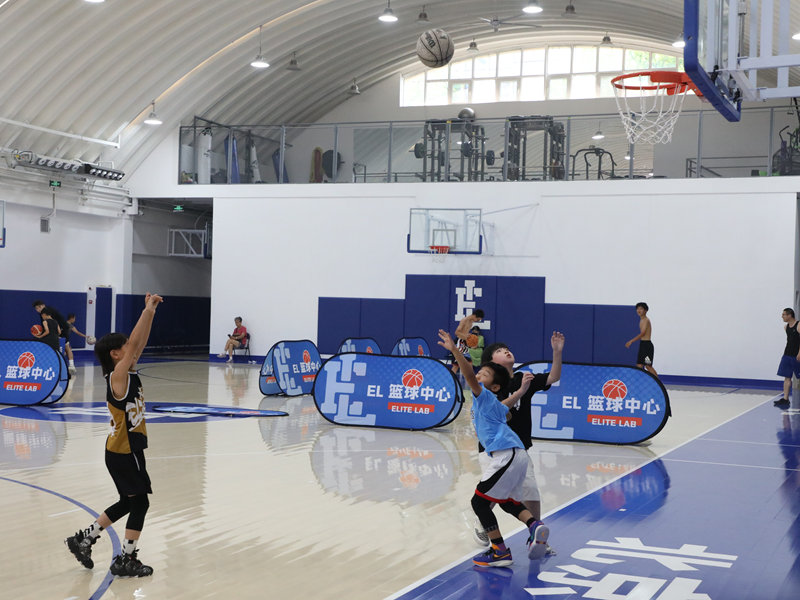
Noise is one of the most overlooked challenges in indoor sports facilities. The sound of a basketball bouncing, shoes squeaking, players shouting, and crowds cheering can create an acoustic environment that is uncomfortable for players and spectators alike. Indoor sports wood flooring plays a surprising and important role in managing this noise.
The first thing to understand is that wood is a natural sound absorber. Unlike concrete or synthetic surfaces, which reflect sound waves and create echoes, wood absorbs a portion of the sound energy. This is due to the cellular structure of hardwood, which contains tiny air pockets that dissipate sound vibrations. A wood floor will always be quieter than a concrete floor in the same space.
But the real acoustic benefit comes from the subfloor system. The foam or rubber pads beneath the hardwood act as a sound dampening layer. They absorb impact noise — the sound of footsteps, ball bounces, and player landings — before it can travel through the structure and radiate into the room. A well-designed subfloor system can reduce impact noise by 10 to 15 decibels compared to a rigid installation.
The finish also affects acoustics. A smooth, high-friction finish tends to produce more squeaking than a properly calibrated finish. This is why traction and acoustics must be balanced during the design phaseilient installation method and is recommended for facilities in challenging environments.
HVAC systems play a crucial role. The facility must have a properly sized heating, ventilation, and air conditioning system that can maintain stable conditions year-round. In large arenas, this may require multiple HVAC zones. The cost of climate control is an investment in the longevity of the floor.
One more consideration: direct sunlight. If the facility has large windows that allow sunlight to hit the floor, UV exposure can cause discoloration and degradation of the finish. Window treatments or UV-filtering glass can mitigate this.
Climate management is not optional for indoor sports wood flooring. It is a core requirement. Facilities that invest in proper climate control will enjoy a floor that performs beautifully for decades. Those that do not will face ongoing problems.
Leave a Reply