

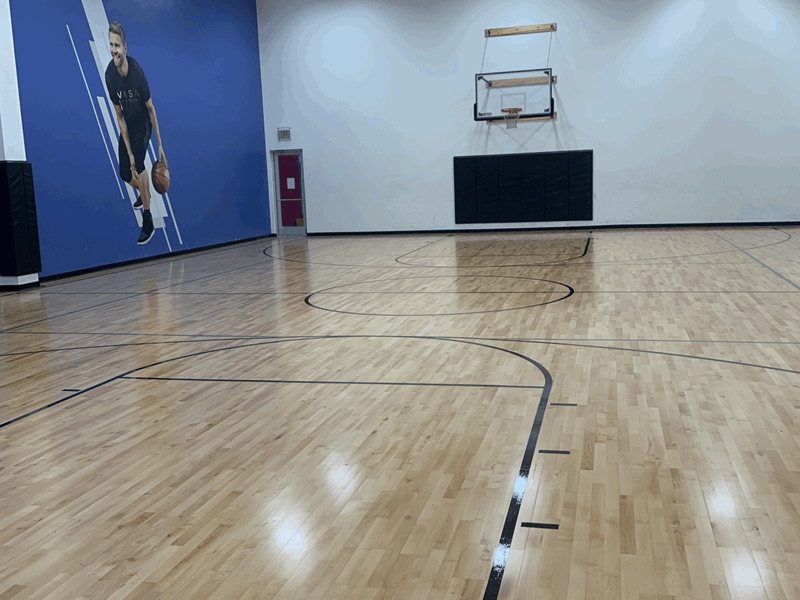
Selecting the right indoor sports wooden flooring for your facility is a decision that will affect performance, safety, maintenance, and budget for decades to come. With so many options available — different species, thicknesses, installation systems, finishes, and performance levels — it can be overwhelming. This guide will walk you through the key factors to consider and help you make an informed decision.
Step 1: Identify Your Primary Sport(s)
The first and most important factor is determining which sport(s) will be played on the floor. Different sports have different requirements:
| Sport | Recommended Thickness | Key Performance Needs |
|---|---|---|
| Basketball | 20-22mm solid or 14-15mm engineered | Ball rebound 90-96%, shock absorption 35-50% |
| Volleyball | 18-20mm solid | Shock absorption 35-50%, vertical deformation <2.3mm |
| Badminton | 14-18mm engineered | Flatness, minimal vibration |
| Handball | 20-22mm solid | Shock absorption, traction |
| Multi-purpose | 18-22mm solid or engineered | Versatility, durability |
| Gymnastics | 18-20mm solid | Shock absorption, firmness |
Step 2: Choose the Right Species
As discussed in our previous article, the species of wood affects performance, appearance, and cost:
- Maple: Best for basketball, the most versatile and widely accepted species.
- Oak: Best for European multi-purpose halls and handball courts.
- Beech: Good budget option for schools and recreational facilities.
- Ash: Good for facilities wanting unique aesthetics.
- Bamboo: Best for sustainable/green building projects.
Step 3: Determine the Thickness and Construction
Solid Hardwood (18-22mm):
- Traditional choice for professional arenas
- Can be sanded and refinished multiple times (6-10 times)
- Must be installed over a wooden subfloor (plywood or OSB)
- Best for: Professional facilities, high-traffic areas
Engineered Wood (14-18mm):
- More dimensionally stable (less affected by humidity)
- Can be installed over concrete with adhesive or floating systems
- Top veneer can be sanded 1-3 times (depending on veneer thickness)
- Best for: Facilities with concrete subfloors, multi-purpose halls
Step 4: Select the Installation System
There are three main installation methods:
1. Nail-Down Installation:
- Planks are nailed directly to a wooden subfloor
- Most traditional method
- Best for: Solid hardwood over plywood subfloors
- Pros: Secure, stable, allows for refinishing
- Cons: Requires wooden subfloor, labor-intensive
2. Glue-Down Installation:
- Planks are adhered to the subfloor with construction adhesive
- Best for: Engineered wood over concrete subfloors
- Pros: Stable, quiet, no nail holes
- Cons: More difficult to remove, limited refinishing
3. Floating Installation:
- Planks are not attached to the subfloor; they "float" on an underlayment
- Best for: Engineered wood over concrete or existing floors
- Pros: Easy installation, can be removed, good for renovation projects
- Cons: May shift over time, limited refinishing
Step 5: Choose the Finish
The finish affects both performance and appearance:
| Finish Type | Gloss Level | Traction | Best For |
|---|---|---|---|
| Matte (Low-Gloss) | 10-30 gloss units | High | Basketball, volleyball |
| Semi-Gloss | 30-60 gloss units | Medium | Multi-purpose |
| Glossy (High-Gloss) | 60-90+ gloss units | Lower | Badminton, dance |
- Sports Lacquer (Polyurethane): The most common finish for sports floors. Durable, easy to maintain, and meets DIN/EN standards.
- Oil Finish: Provides a more natural look and feel, but requires more maintenance.
- UV-Cured Finish: Extremely durable and fast-curing, used in high-traffic professional arenas.
Step 6: Verify Compliance with Standards
Make sure the flooring meets the standards required by your sport's governing body:
- FIBA: For basketball courts
- NCAA/NFHS: For US collegiate and high school basketball
- EN 14904: European standard for indoor sports flooring
- DIN 18032: German standard for sports flooring
- ITF: For tennis courts
Step 7: Set Your Budget
| Budget Level | Recommended Option | Estimated Cost (Installed) |
|---|---|---|
| Economy | Beech, engineered, glue-down | $18-28/sq ft |
| Mid-Range | Maple #1 Common, engineered, floating | $28-40/sq ft |
| Premium | Maple Select, solid, nail-down | $40-55/sq ft |
| Ultra-Premium | Maple Select, solid, custom finish, NBA-grade | $55-75/sq ft |
Step 8: Consider the Subfloor
The subfloor is just as important as the flooring itself:
- Plywood (3/4" or 19mm): Ideal for nail-down installation. Must be smooth, flat, and well-secured.
- Concrete: Requires a moisture barrier and either glue-down or floating installation. Must have a moisture content below 3%.
- Existing Floor: Can often be covered with a floating system and underlayment.
Conclusion
Choosing the right indoor sports wooden flooring requires careful consideration of your sport, budget, subfloor, and performance requirements. By following these steps and working with experienced professionals, you can ensure that your facility has a floor that performs at the highest level for years to come.
Leave a Reply