

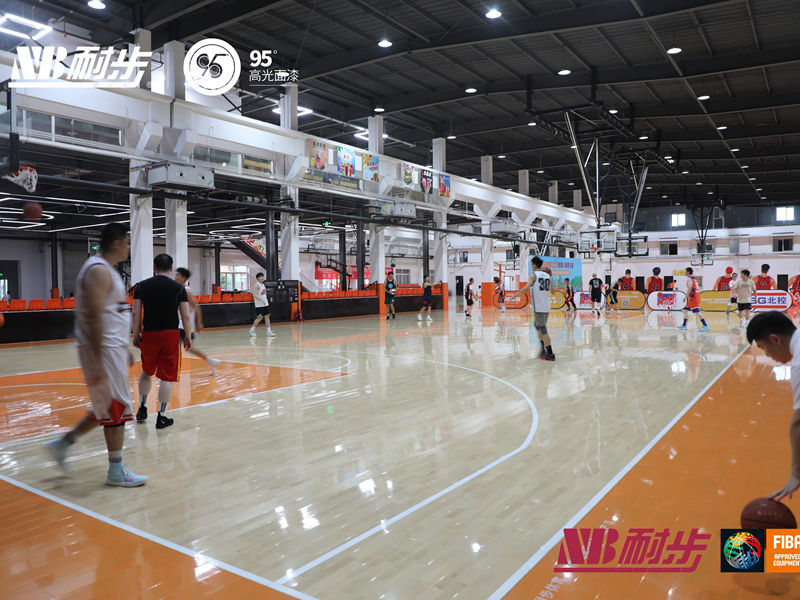
Every design detail of indoor basketball court wood flooring is tailored to meet the unique movement characteristics of basketball, a sport that combines constant running, explosive jumps, sudden directional changes, and frequent physical contact. The surface of the wood is treated to create a precise level of friction that strikes a perfect balance: it provides enough grip to prevent players from slipping when they make sharp cuts or push off for a fast break, but it is not so sticky that it restricts the natural sliding motion that players use to adjust their position after landing from a jump. This carefully calibrated friction level allows athletes to move with full confidence, knowing that their feet will not unexpectedly slide out from under them, and that they will not waste extra energy fighting against a surface that grabs their shoes too aggressively.
Rebound performance is another critical factor that directly impacts how well players can perform on the court. A high-quality wood basketball floor delivers consistent ball rebound across every square foot of the playing area. When a player dribbles the ball, the bounce height and speed they feel must be identical in the three-point line, near the basket, and in the far corners of the court. This uniformity means that players do not have to adjust their dribbling strength or shooting mechanics based on where they are standing, which helps them maintain their natural rhythm and muscle memory throughout the entire game. Floors that lack this consistent rebound can create unfair advantages, making it harder for players to control the ball in certain areas and disrupting the flow of even the most carefully practiced offensive plays.
Shock absorption is the most vital performance feature that protects athletes’ long-term physical health. When a 200-pound player lands after a powerful dunk, the force exerted on the floor can be several times their body weight. A well-designed wood basketball floor absorbs more than 50 percent of that impact force, rather than letting all of it bounce back directly into the player’s joints. Over the course of a long season, with hundreds of practices and games, this level of shock absorption drastically reduces the risk of overuse injuries like knee tendonitis, ankle sprains, and lower back strain. Even for casual players who only come to the court a few times a week, this gentle cushioning makes playing far more comfortable, so they can enjoy the sport without waking up with sore joints the next morning.
Leave a Reply