

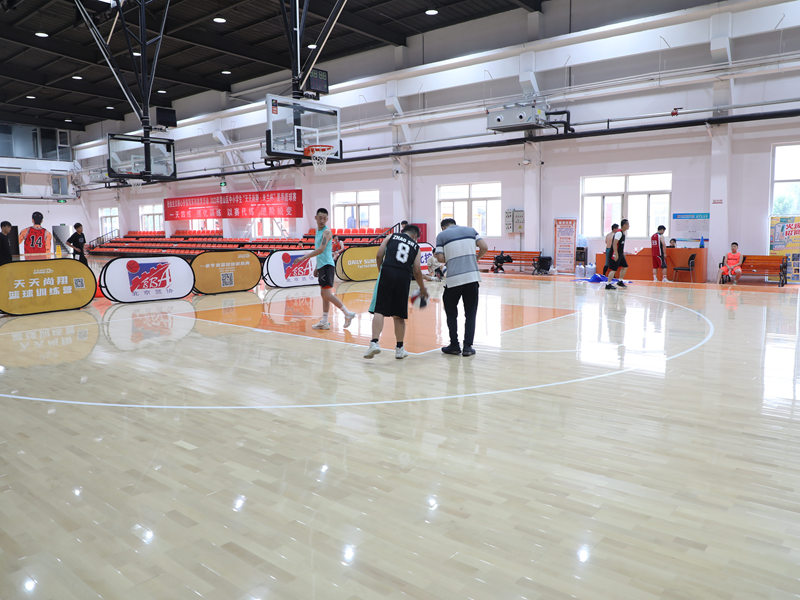
Wood is a natural organic material, which means it responds dynamically to changes in the environment around it, and indoor basketball court wood flooring is no exception to this rule. The biggest environmental factor that impacts a wood basketball court is the relative humidity of the air inside the venue. When the surrounding air is very humid, the wood planks will absorb moisture from the air, causing them to swell and expand in width. When the air is very dry, the wood will release moisture back into the air, causing it to shrink and get narrower. These natural changes in size are not a flaw in the flooring system—they are a fundamental property of all natural wood, and a properly designed indoor basketball court wood flooring system is built to accommodate this movement safely without getting damaged. The problems only start to happen when the changes in humidity are extreme, sudden, or not accounted for during the installation process, leading to issues like cupped planks, wide gaps between boards, or even warping that makes the surface uneven and dangerous to play on.
Temperature also plays an important role in the health of indoor basketball court wood flooring, though its effects are usually indirect. Higher air temperatures allow the air to hold more moisture, which changes the equilibrium moisture content that the wood will naturally settle into, while very low temperatures can slow down the movement of moisture through the wood fibers. The biggest risk from temperature fluctuations comes in venues that are not climate controlled year-round, like school gyms that are left unheated and unairconditioned during long summer or winter breaks. If a gym is closed for months in the middle of summer with no ventilation, the humidity inside can skyrocket, causing the wood planks to swell so much that they push against each other and buckle upwards, creating dangerous raised spots on the playing surface. If the same gym is left unheated in the middle of a cold winter, the air inside can become extremely dry, causing the planks to shrink dramatically and leave wide, deep gaps between each board that can catch the edge of a basketball shoe and cause a player to trip.
The best way to protect indoor basketball court wood flooring from these environmental risks is to maintain consistent, stable climate conditions inside the venue all year round. The ideal humidity range for a basketball wood floor is between 45% and 55% relative humidity, with a temperature that stays between 60 and 75 degrees Fahrenheit. By keeping the venue’s HVAC system running at a low level even when no one is using the court, venue operators can avoid the extreme swings in humidity and temperature that cause most wood floor damage. For venues that do not have full climate control, installing a portable dehumidifier for the summer months and a humidifier for the dry winter months can make a huge difference, keeping the moisture content of the wood stable and eliminating almost all of the seasonal movement issues. Regularly testing the moisture content of the wood with a moisture meter every few months also allows venue operators to catch small changes early, before they turn into major, expensive problems that require full resurfacing or even replacement of the floor. When managed correctly, the natural response of wood to its environment is not a problem at all—it is just a characteristic that makes indoor basketball court wood flooring feel alive and responsive under players’ feet.
Leave a Reply