

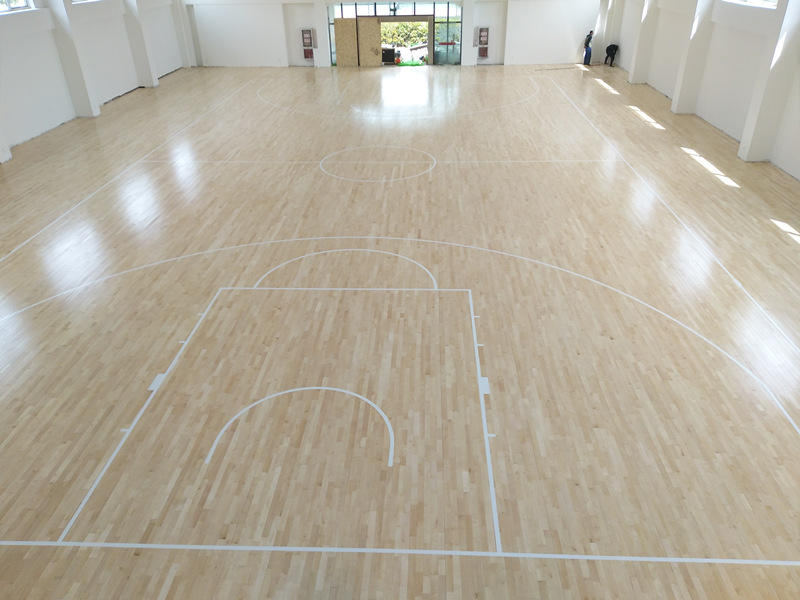
One of the most common and most important questions gym owners and home fitness enthusiasts face is whether to choose solid hardwood or engineered wood for their gym flooring. Both options have distinct advantages and disadvantages, and the right choice depends on your specific environment, budget, subfloor type, and long-term goals. Let us break it down in detail.
Solid Hardwood: The Traditional Choice
Solid hardwood is milled from a single piece of natural timber. It is dense, beautiful, and can be sanded and refinished multiple times throughout its lifespan. For gym flooring, the most popular species is sugar maple, followed by red oak, hickory, and white oak.
The main advantage of solid hardwood is its longevity. A well-maintained solid hardwood gym floor can last 30 to 50 years, and because it can be refinished, you essentially get a new floor every time you sand it down. This makes solid hardwood a true long-term investment. Each refinishing restores the surface to like-new condition, extending the life of the floor indefinitely.
However, solid hardwood has significant limitations. It is highly sensitive to moisture and temperature changes. In a gym environment — where sweat, spills, and humidity are constant — solid hardwood can expand, contract, warp, or cup if not properly sealed and maintained. It also requires a nail-down or staple-down installation, which limits where it can be installed. Solid hardwood is not suitable for basements or over concrete slabs without a plywood subfloor. If your gym is in a below-grade room or a climate with extreme humidity swings, solid hardwood is a risky choice.
Engineered Wood: The Modern Solution
Engineered wood consists of a thin layer of real hardwood veneer bonded to multiple layers of plywood or high-density fiberboard. This cross-grain construction makes it far more dimensionally stable than solid hardwood, especially in environments with fluctuating humidity. The layers of plywood counteract the natural tendency of wood to expand and contract, keeping the floor flat and stable year-round.
For gym flooring, engineered wood is often the smarter choice. It resists moisture better, can be installed over concrete slabs using a floating or glue-down method, and is generally more affordable than solid hardwood of the same species. Many high-end engineered products now feature a 3mm to 6mm wear layer, which is thick enough to be sanded once or twice. This means you still get some refinishing capability, though not as much as solid hardwood.
The downside? Engineered wood cannot be refinished as many times as solid hardwood. Once the veneer is worn through, the floor must be replaced. However, with a quality product and proper maintenance, an engineered wood gym floor can easily last 20 to 25 years. For most home gym owners, this is more than sufficient.
The Verdict
If you are installing a gym floor in a climate-controlled room with a proper plywood subfloor, solid hardwood is the gold standard for durability and refinishing potential. It is the best choice if you plan to keep the gym for decades and want the option to refinish multiple times. If you are working with a basement, concrete slab, or an environment with high humidity, engineered wood is the safer, more practical choice. For most home gym owners, engineered maple offers the best balance of performance, stability, and cost. It gives you the look and feel of real hardwood without the moisture-related headaches.
Leave a Reply