

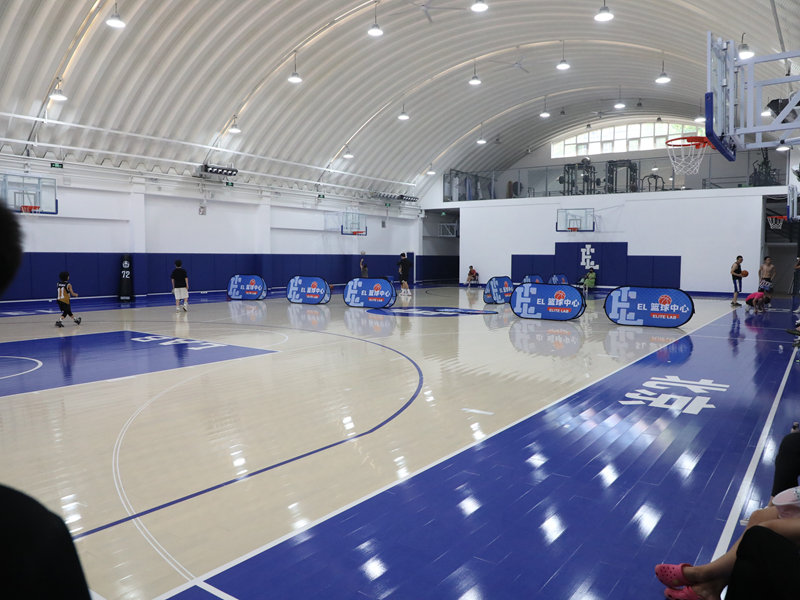
Wood is a naturally hygroscopic material, which means it constantly absorbs and releases moisture from the air around it, expanding when humidity is high and contracting when humidity is low. For indoor basketball court wooden flooring, which is made from large, interlocking panels of solid wood, uncontrolled fluctuations in indoor temperature and humidity are the single biggest cause of long-term damage, far more impactful than regular wear and tear from basketball play. Implementing a consistent environmental control strategy is absolutely essential to keep your floor stable, flat, and free from gaps, warping, and cracking.
The ideal environmental range for indoor basketball court wooden flooring is a consistent relative humidity level between 40% and 60%, and a steady indoor temperature between 15 and 25 degrees Celsius. When the relative humidity in the space rises above 60%, the wood panels will absorb excess moisture from the air and begin to expand. If the panels have no room to expand, they will start to cup, warp, or buckle upwards at the edges, creating uneven, dangerous spots on the playing surface that can cause players to trip and fall. When the relative humidity drops below 40%, especially during dry winter months when heating systems are running constantly, the wood panels will release moisture and shrink, creating large, unsightly gaps between the planks that can trap dirt and debris, and weaken the overall structural integrity of the floor.
To maintain stable humidity levels for your indoor basketball court wooden flooring, you should install a high-quality HVAC system that is sized appropriately for the full volume of your arena space, with both humidification and dehumidification capabilities. This system will allow you to automatically adjust the moisture content of the air throughout the entire year, compensating for the natural seasonal changes in outdoor humidity that would otherwise impact your indoor space. You should install digital hygrometers at multiple locations across the court, to constantly monitor the relative humidity levels, and set up alerts that will notify your facility management team immediately if the humidity moves outside of the safe 40-60% range.
There are several additional steps you can take to protect your indoor basketball court wooden flooring from extreme environmental conditions. During very humid summer months, you should make sure that the arena is properly ventilated, and avoid leaving large exterior doors open for long periods of time, which would allow moist outdoor air to flood into the space. During the dry winter heating season, run your humidification system consistently to add moisture back into the air, and never allow the indoor humidity to drop below 35% for extended periods. You should also never install your basketball court wooden flooring in a space that has large, unshaded south-facing windows that allow direct sunlight to hit the floor for hours at a time, as the intense heat from direct sunlight will dry out the wood panels unevenly, causing them to warp and crack in the sun-exposed areas.
By maintaining a stable, consistent indoor environment all year round, you can eliminate almost all of the most common structural problems that affect indoor basketball court wooden flooring. A floor that is kept at a consistent moisture content will remain flat, smooth, and stable for decades, delivering consistent performance and safety for every player that uses the court.
Leave a Reply