

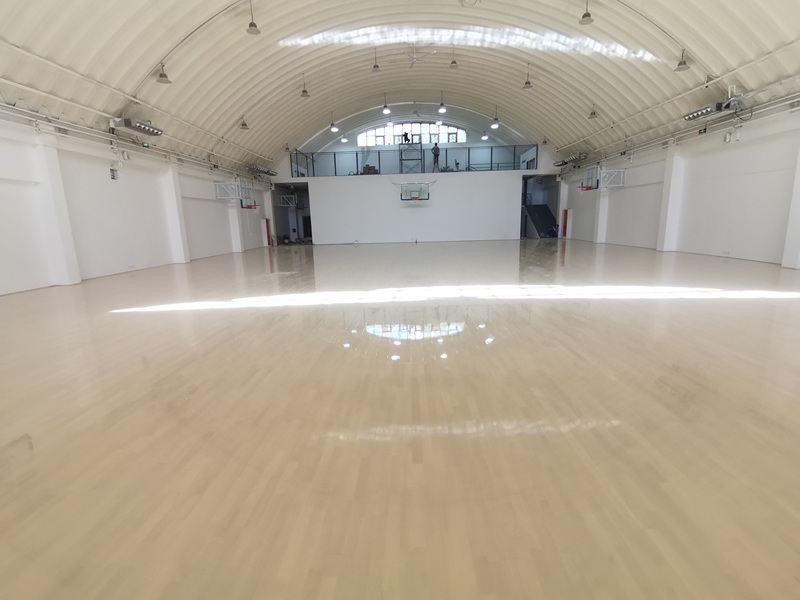
Building a new indoor basketball court wooden flooring system is a significant capital investment, and careful budget planning that accounts for all of the hidden costs, not just the top wood panels, will help you avoid unexpected expenses and select a system that delivers the best long-term value for your venue. The total cost of a basketball wood floor can vary dramatically based on many different factors, and understanding these cost drivers will help you make informed decisions that align with your venue’s needs and financial resources.
The first and most obvious cost component for indoor basketball court wooden flooring is the top hardwood playing surface, which typically makes up between 30% and 40% of the total project budget. The price varies significantly based on the wood species you select, the thickness of the panels, and the quality grade of the wood. Lower-cost options like beech or lower-grade oak are the most budget-friendly, while premium grade hard maple, the industry standard for professional competition, is at the higher end of the price range. The thickness of the panels also has a major impact on cost: 22 millimeter thick solid maple panels cost significantly more than 18 millimeter panels, but they offer a much longer usable lifespan and can be refinished many more times over the life of the floor.
The second major, often overlooked cost category for indoor basketball court wooden flooring is the full underlying structural system, including the moisture barrier, shock absorption pads, sleepers, and sub-base layers. These components typically make up another 30% to 40% of the total project cost, and cutting corners here to save money is one of the most common and costly mistakes that facility managers make. A low-quality, cheap subfloor system will deliver poor shock absorption, leading to higher rates of player injury, and it will be far more prone to structural failure, warping, and uneven spots that will require expensive repairs just a few years after installation. Investing in a high-quality, certified structural system is always the best long-term value, as it will deliver consistent performance for decades without needing major repairs.
Installation labor costs make up the next major portion of your indoor basketball court wooden flooring budget, typically accounting for 20% to 30% of the total project price. Installing a high-performance sports wood floor is a highly specialized skill that requires years of experience, and it is not a job that can be done by a general residential flooring contractor. Hiring an experienced, certified installation team that specializes exclusively in sports flooring will cost more upfront, but it will ensure that the floor is installed correctly, following all industry best practices, and it will eliminate the risk of costly installation mistakes that could ruin your entire floor. You should always get multiple detailed quotes from different specialized sports flooring contractors, and verify their references and past project experience before making a hiring decision.
Finally, you need to budget for additional hidden costs that many people forget to account for, including the multi-layer sports floor finish, professional court line painting, custom logo application, and the initial post-installation maintenance supplies. You should also set aside a small portion of your total budget as a contingency fund, to cover any unexpected issues that may be discovered when you start preparing the base concrete slab, such as high moisture levels or uneven surfaces that require extra preparation work. When you are comparing different indoor basketball court wooden flooring options, it is important to calculate the total cost of ownership over the full 20 to 30 year lifespan of the floor, not just the upfront purchase price. A slightly more expensive high-quality system that lasts 30 years with minimal maintenance costs will almost always deliver far better long-term value than a cheap low-quality system that needs to be fully replaced after 10 years.
Leave a Reply