

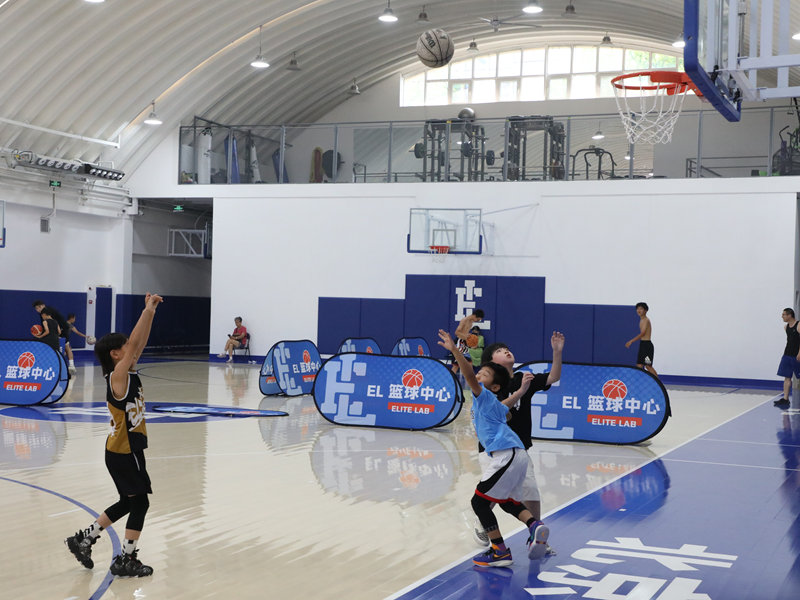
Even the best-installed wooden basketball court can develop problems over time. Moisture issues, wear and tear, and improper maintenance can all take a toll on the floor. In this article, we will cover the most common problems that basketball court wooden flooring faces and provide practical solutions for each one.
Problem 1: Cupping and Crowning
Cupping occurs when the edges of a plank are higher than the center, creating a concave shape. Crowning is the opposite — the center of the plank is higher than the edges. Both conditions are caused by moisture imbalances. Cupping happens when the bottom of the plank absorbs more moisture than the top, while crowning happens when the top absorbs more moisture than the bottom.
The solution is to address the moisture issue. If the subfloor is too wet, install a better moisture barrier or improve drainage. If the air is too dry, use a humidifier. In mild cases, cupping and crowning can be reversed by allowing the wood to acclimate to a more stable environment. In severe cases, the affected planks may need to be replaced.
Problem 2: Gapping and Shrinkage
Gaps between planks are a common problem, especially in dry climates or during the winter months. When the wood loses moisture, it shrinks, and the gaps between planks become visible. While small gaps are normal and can actually be beneficial for allowing the wood to expand and contract, large gaps are unsightly and can be a tripping hazard.
To minimize gapping, maintain the humidity in the facility between 35 and 50 percent. If gaps have already formed, they can be filled with wood filler or flexible caulk. However, the best long-term solution is to address the underlying humidity problem.
Problem 3: Squeaking and Noise
A squeaky basketball court is not just annoying — it can be a sign of a structural problem. Squeaking is usually caused by loose planks, inadequate fastening, or a weak subfloor. When players move on the court, the planks shift slightly, creating friction and noise.
To fix squeaking, identify the loose planks and re-fasten them. In some cases, adhesive may need to be applied between the planks and the subfloor. If the subfloor is weak, it may need to be reinforced with additional plywood or structural supports.
Problem 4: Uneven Bounce
An uneven ball bounce is a serious performance issue that can affect the quality of play. It is usually caused by an uneven subfloor, inconsistent plank thickness, or warping of the wood.
To diagnose the problem, use a bounce test — drop a basketball from a fixed height and measure the bounce at multiple points across the court. If the variation is more than 6 millimeters, there is a problem. The solution may involve sanding down high spots, replacing warped planks, or leveling the subfloor.
Problem 5: Finish Wear and Dullness
Over time, the finish on a basketball court will wear down, becoming dull and losing its traction. This is a normal part of the floor's life cycle, but it can be accelerated by heavy use, improper cleaning, or harsh chemicals.
The solution is regular refinishing. Most courts should be refinished every 3 to 5 years. Between refinishing, the floor can be maintained with a recoat of finish to restore gloss and traction. Use only products recommended by the floor manufacturer, and avoid abrasive cleaners that can damage the finish.
Problem 6: Water Damage and Staining
Water is the number one enemy of wooden flooring. Spills that are not cleaned up promptly can seep into the wood, causing staining, warping, and even mold growth. In extreme cases, water damage can destroy entire sections of the floor.
Prevention is the best solution. Clean up spills immediately, use a dehumidifier to control moisture, and ensure that the facility has proper drainage. If water damage has already occurred, the affected planks should be replaced as soon as possible to prevent the problem from spreading.
Problem 7: Scratches and Dents
While hard maple is very resistant to scratches and dents, they can still occur, especially in high-traffic areas like the key, the free-throw line, and the sidelines. Deep scratches can affect the ball bounce and create an uneven surface.
Minor scratches can be repaired with wood filler and a touch-up of the finish. Deeper scratches may require sanding and refinishing of the affected area. To prevent scratches, enforce a strict shoe policy that requires non-marking, soft-soled shoes.
Problem 8: Mold and Mildew
Mold and mildew can grow on wooden floors in damp, poorly ventilated environments. They not only look unsightly but can also cause health problems for players and staff.
To prevent mold, maintain proper ventilation and humidity control. If mold is detected, it should be cleaned immediately with a solution of water and mild detergent. For severe infestations, the affected planks may need to be removed and replaced.
Prevention Is the Best Medicine
The best way to deal with problems is to prevent them in the first place. Regular maintenance, proper climate control, a strict shoe policy, and prompt attention to spills and damage can go a long way toward keeping your basketball court wooden floor in top condition.
In conclusion, while problems can arise with any wooden floor, most are preventable or fixable with the right knowledge and care. By understanding these common issues and their solutions, you can keep your court performing at its best for years to come.
Leave a Reply