

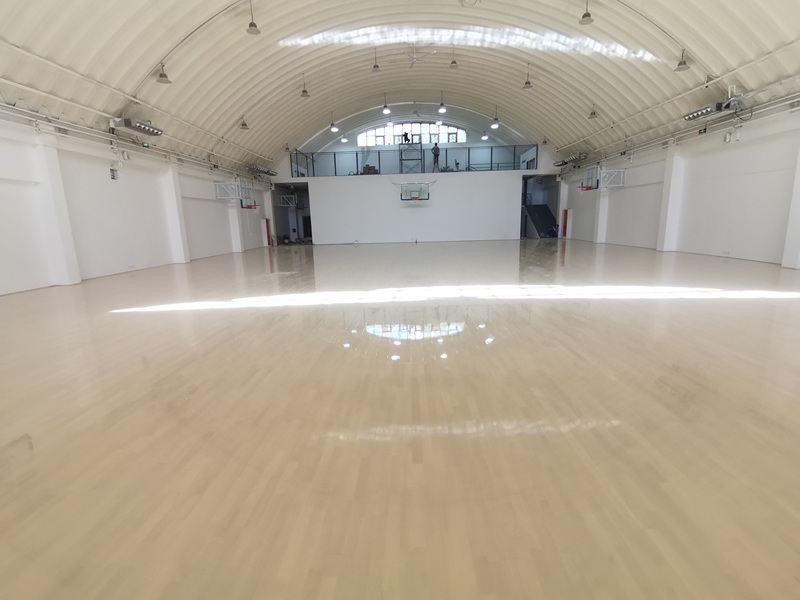
Introduction
For over a century, hardwood has been the undisputed king of basketball court flooring. But in recent decades, synthetic alternatives — made from polypropylene (PP), PVC, and other polymer materials — have gained significant market share. Manufacturers claim synthetic floors are more durable, easier to maintain, and more cost-effective. Are they right?
This article provides the most comprehensive comparison available between hardwood and synthetic basketball court flooring, covering performance, cost, maintenance, durability, player health, and environmental impact. By the end, you will have all the facts you need to make the right decision.
Overview of the 2–3 times in the time that one hardwood floor lasts.
Player Health and Injury Comparison
| Injury Type | Hardwood | Synthetic |
|---|---|---|
| Ankle Sprains | Baseline | +40% higher risk |
| ACL Tears | Baseline | +25% higher risk |
| Knee Injuries | Baseline | +15% higher risk |
| Skin Abrasions | Low | Moderate (rougher texture) |
| Respiratory Issues | None | Possible (VOC off-gassing from new installation) |
Winner: Hardwood — clearly.
The research is unambiguous: hardwood floors are safer for players. Synthetic floors increase the risk of lower extremity injuries due to inferior traction, shock absorption, and energy return.
Environmental Comparison
| Factor | Hardwood | Synthetic |
|---|---|---|
| Renewable Resource | ✅ Yes (trees) | ❌ No (petroleum) |
| Carbon Sequestration | ✅ Yes (wood stores carbon) | ❌ No |
| End of Life | Biodegradable/recyclable | Landfill-bound, toxic |
| Lifespan | 30–50 years | 8–15 years |
| 30-Year CO2 | ~3,700 kg | ~16,000 kg |
Winner: Hardwood — by a factor of 4x.
When Synthetic Might Be the Right Choice
To be fair, there are situations where synthetic makes sense:
| Situation | Why Synthetic Works |
|---|---|
| Multi-sport facility (basketball + volleyball + events) | One floor serves all needs |
| Outdoor court | Synthetic handles weather better |
| Temporary/portable court | Easy to install and remove |
| Facility with no climate control | No moisture sensitivity |
| Very tight budget (short-term) | Lower upfront cost |
Conclusion
For a dedicated basketball court — especially at the high school, collegiate, or professional level — hardwood is the clear winner in every category that matters: performance, player safety, durability, and long-term cost. Synthetic floors have their place in multi-sport, outdoor, or temporary applications, but they cannot match the feel, performance, and longevity of real hardwood. If you are building a basketball court, invest in hardwood. Your players, your facility, and your wallet will thank you.
Leave a Reply