

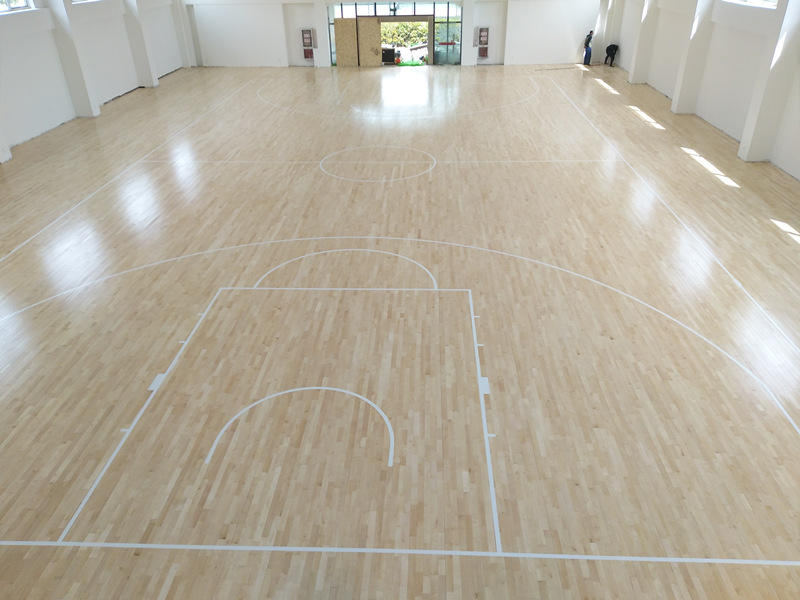
As the core surface decoration technology of modern indoor sports wooden flooring, the wear resistance of printed patterns is directly related to the service life and maintenance cost of the floor. Different from the decorative patterns on ordinary household wooden flooring, the patterns on sports wooden flooring need to withstand extremely high frequency of friction, including the repeated impact of sports shoes, the rolling of sports equipment, and the friction generated when athletes fall and slide. Therefore, the wear resistance performance of printed patterns has become one of the core indicators to measure the technical level of printing technology.
The modern sports-grade printing process adopts a multi-layer superimposed protection design. After the pattern is printed on the surface of the floor base material, a layer of transparent wear-resistant primer will be cured on the surface through UV light, and then multiple layers of high-strength sports-grade polyurethane wear-resistant paint will be sprayed. The printed pattern is completely wrapped between the base material and the wear-resistant layer, which does not directly contact the external friction force. This structural design makes the wear resistance of the printed pattern far higher than that of the traditional hand-painted pattern. Even after tens of thousands of times of sports shoe friction, the pattern can still maintain a clear and complete effect, and there will be no local pattern fading and blurring.
In the actual test scenario, the printed sports wooden flooring has withstood the extreme wear test of simulating 10 years of high-frequency use. After continuous friction with professional sports shoe soles for hundreds of hours, the pattern on the surface of the floor still maintains a high degree of clarity, and the color difference before and after wear is far lower than the national standard limit. This excellent wear resistance performance benefits from the special ink formula used in the printing process. This ink has extremely strong adhesion, can form a highly integrated combination with the surface of the wooden base material, and will not fall off or delaminate due to long-term friction.
For the areas with extremely high local use frequency in the venue, such as the free throw line area of the basketball court, the service area of the badminton court, etc., the printing process can also be optimized in a targeted manner. By increasing the ink density of the local pattern and adding an extra layer of wear-resistant UV coating, the wear resistance of the pattern in the high-frequency use area is further enhanced. This targeted optimization design ensures that the pattern of the entire venue can maintain a consistent clear effect during the long-term use process, and will not cause the local pattern to fade in advance due to the high use frequency, which affects the overall aesthetic feeling.
In addition to physical wear resistance, the printed pattern also has excellent anti-ultraviolet aging performance. Even if the venue is exposed to a certain amount of natural light for a long time, the special ink used in the printing process can effectively resist the erosion of ultraviolet rays, and the color will not turn yellow and fade. This performance ensures that the floor of the venue can still maintain the initial bright pattern effect after several years of use, reducing the frequency of floor renovation and maintenance, and effectively reducing the long-term operation cost of the venue.
Leave a Reply