

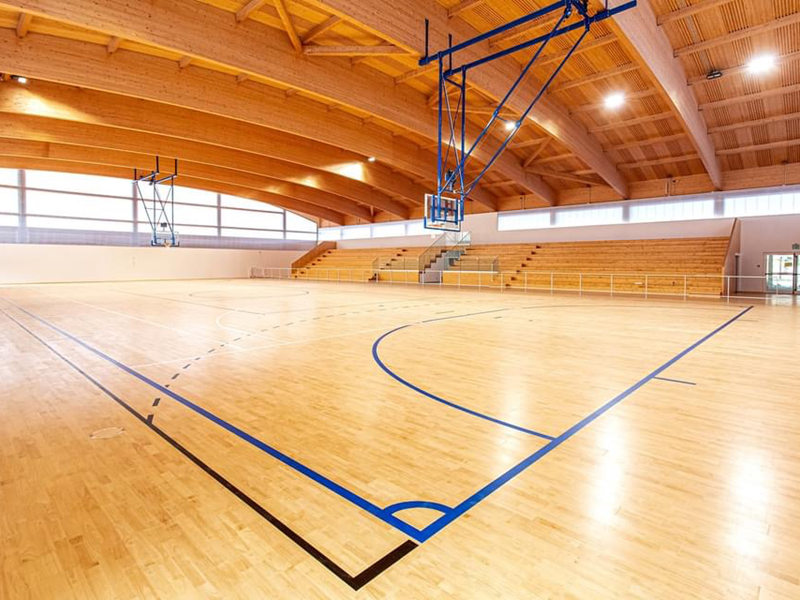
Not all wood is created equal when it comes to sports flooring. The species of wood used for the top panel directly affects durability, appearance, hardness, and cost. The most commonly used species in indoor sports wood flooring are maple, oak, birch, ash, and pine. Each one has distinct characteristics that make it suitable for different types of facilities and different types of sports.
Maple is the gold standard for basketball courts and professional-level facilities. It is extremely hard, with a Janka hardness rating of around 1450. This means it resists denting and surface wear very well. Maple also has a tight, uniform grain that takes paint and finish evenly, resulting in a clean, professional look. The downside is that maple is more expensive than other species.
Oak is harder than maple in some varieties, with a Janka rating that can exceed 1500. It has a more pronounced grain pattern, which gives it a rustic, high-end appearance. Oak is often used in European facilities and in venues where aesthetics are a priority. However, oak can be more difficult to finish evenly due to its open grain structure.
Birch is a close relative of maple and offers similar performance at a slightly lower cost. It is slightly softer, with a Janka rating around 1260, but still very durable for most sports applications. Birch is a popular choice for multi-purpose gyms where cost needs to be balanced with quality.
Ash is one of the hardest domestic woods available, with a Janka rating around 1320. It has excellent shock absorption properties and a light, clean color that works well in modern facilities. Ash is commonly used in badminton and volleyball courts.
Pine is the softest and most affordable option. It is rarely used in professional settings but can be found in training facilities, community centers, and budget-conscious school gyms. Pine requires more maintenance and has a shorter lifespan than harder species, but it gets the job done when budget is the primary constraint.
Choosing the right species is not about picking the most expensive option. It is about matching the wood to the usage intensity, the sport being played, and the budget available. A good flooring provider will help you make that match, not just sell you the most expensive product.
Leave a Reply