

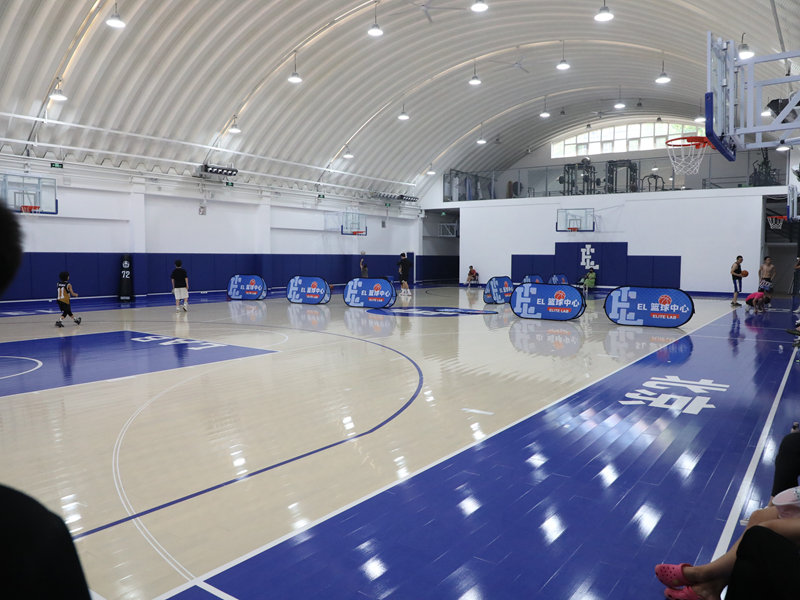
Traction on a basketball court is a delicate balance: too little grip and players will slip during critical movements, leading to avoidable injuries; too much grip and their shoes will stick to the surface, causing sudden, unexpected twists that sprain ankles and tear knee ligaments. Indoor basketball court wooden flooring achieves this perfect balance through a combination of the natural properties of the wood grain and the carefully formulated finish applied to its surface. The microscopic texture of a properly finished wood surface creates thousands of tiny contact points with the rubber on the bottom of basketball shoes, creating just enough friction to allow players to plant their feet firmly when stopping or changing direction, while still allowing the shoe to slide slightly in a controlled way during the natural flow of movement. This controlled slip is actually a critical safety feature that many synthetic surfaces fail to replicate, as overly aggressive traction can cause the foot to lock in place while the rest of the body continues moving, creating extreme torque on the knee joint. The traction of a well-maintained wood court remains remarkably consistent across a wide range of temperature and humidity conditions, unlike many synthetic surfaces that become slippery when even slightly damp or overly sticky when exposed to high heat. Players often comment that they do not need to overthink their foot placement on a properly maintained indoor basketball court wooden flooring, because the surface behaves predictably no matter where they are on the court, allowing them to focus entirely on their game rather than worrying about slipping or sticking unexpectedly.
Traction Characteristics That Make Indoor Basketball Court Wooden Flooring Ideal for Competitive Play
Leave a Reply