

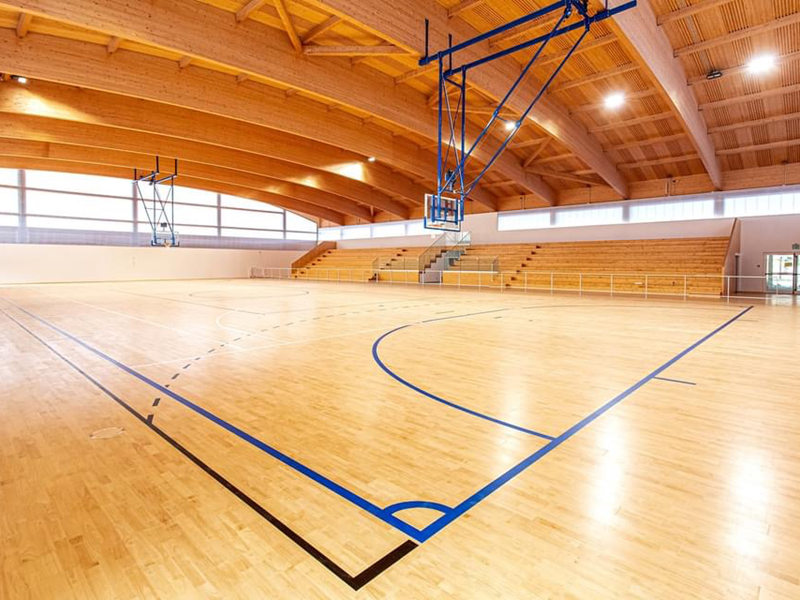
Introduction
When it comes to building or renovating a basketball court, one of the most critical decisions you will make is selecting the right hardwood flooring. The floor is not just a surface — it is the foundation of the game. It affects player performance, injury prevention, ball bounce, and the overall aesthetic of the facility. Whether you are a school administrator, a sports facility manager, a professional team owner, or a recreational center operator, understanding the nuances of basketball court hardwood flooring is essential.
This comprehensive guide will walk you through everything you need to know — from wood species and thickness to finish options, installation methods, and budget considerations. By the end of this article, you will have the knowledge to make an informed decision that serves your facility for decades to come.
Why Hardwood Is the Gold Standard for Basketball Courts
Before diving into the specifics, let us address the fundamental question: Why hardwood?
Synthetic surfaces, concrete, and other alternatives exist, but hardwood remains the undisputed king of basketball court flooring for several compelling reasons:
1. Superior Ball Bounce: Hardwood provides a consistent, predictable ball bounce that players at every level have come to expect. The elasticity of wood allows the ball to rebound at a standardized height, which is critical for fair play.
2. Shock Absorption: Quality hardwood flooring systems are designed with sub-flooring layers that absorb impact, reducing stress on players' joints, knees, and ankles. This is especially important for young athletes and those playing multiple games per week.
3. Traction and Grip: Properly finished hardwood offers excellent traction without being overly sticky. Players can make quick cuts, sudden stops, and explosive movements without slipping.
4. Durability: A well-maintained hardwood basketball court can last 20 to 50 years. While the upfront cost is higher than alternatives, the long-term value is unmatched.
5. Aesthetics: There is nothing quite like the look and feel of a polished hardwood basketball court. It elevates the entire facility and creates a professional atmosphere.
Understanding Wood Species: Maple vs. Oak vs. Birch
The three most common wood species used for basketball court flooring are hard maple, red oak, and birch. Each has its own characteristics, advantages, and ideal use cases.
Hard Maple (Acer saccharum) — The Industry Standard
Hard maple, often referred to as sugar maple or rock maple, is by far the most popular choice for professional and collegiate basketball courts. It is the wood you see in NBA arenas, NCAA tournament venues, and elite training facilities worldwide.
Advantages of Hard Maple:
- Extremely dense and hard (Janka hardness rating of approximately 1,450 lbf)
- Tight, uniform grain pattern that provides consistent ball response
- Light, natural color that is easy to stain and finish
- Excellent resistance to denting and wear
- Meets all NBA, FIBA, and NCAA specifications
Disadvantages:
- Higher cost compared to oak or birch
- Can be more difficult to source in large, defect-free planks
Red Oak (Quercus rubra) — The Budget-Friendly Alternative
Red oak is the second most popular choice, particularly for high school gymnasiums, recreational centers, and facilities with tighter budgets.
Advantages of Red Oak:
- More affordable than maple (typically 20–30% less expensive)
- Widely available in large, clear planks
- Good hardness (Janka rating of approximately 1,290 lbf)
- Attractive grain pattern with a warm, reddish tone
Disadvantages:
- More porous than maple, which can affect finish quality
- Slightly less consistent ball bounce
- Tends to darken over time with UV exposure
- Not typically approved for professional-level play
Birch (Betula alleghaniensis) — The European Favorite
Birch is commonly used in European basketball courts and is gaining popularity in North America for training facilities and multi-sport arenas.
Advantages of Birch:
- Very hard and dense (Janka rating of approximately 1,260–1,550 lbf depending on the species)
- Fine, even grain that provides excellent ball response
- Light color similar to maple
- Good dimensional stability
Disadvantages:
- Less commonly available in North America
- Can be more expensive than oak but comparable to maple
- May not meet all North American sport specification standards
Thickness Matters: 3/4" vs. 7/16" vs. 1/2"
The thickness of the hardwood planks is one of the most important specifications to consider. The standard thicknesses are:
| Thickness | Common Use | Pros | Cons |
|---|---|---|---|
| 3/4" (19mm) | NBA, NCAA, professional | Best performance, most durable, can be sanded and refinished multiple times | Most expensive |
| 7/16" (11mm) | High school, recreational | Good balance of cost and performance | Can only be refinished 1–2 times |
| 1/2" (13mm) | Multi-sport, light use | Most affordable | Limited refinishing, less durable |
The NBA Standard: The National Basketball Association requires a minimum of 3/4" thick northern hard maple. This thickness, combined with a maple sub-floor and engineered support system, delivers the world-class performance that fans expect.
High School Standard: Most high school gymnasiums use 3/4" maple or 7/16" oak. The 7/16" option is popular because it provides adequate performance at a lower cost.
Recreational Standard: For community centers and churches, 1/2" maple or oak is often sufficient, especially if the court sees light to moderate use.
Finish Options: Which Coating Is Right for You?
The finish is what protects the wood and determines how the ball interacts with the surface. There are three main types of finishes used on basketball courts:
1. Polyurethane Finish
- Most common for NBA and professional courts
- Very durable and resistant to scratches
- Provides a consistent, medium-gloss appearance
- Requires professional application
- Can be reapplied every 3–5 years
2. Penetrating Oil Finish (e.g., Osmo, Bona Traffic HD)
- Soaks into the wood rather than sitting on top
- More natural look and feel
- Easier to touch up and maintain
- Less slippery when slightly damp
- Preferred by many recreational and training facilities
3. Water-Based Polyurethane (Low VOC)
- Environmentally friendly option
- Fast drying time
- Less yellowing over time compared to oil-based finishes
- Growing in popularity due to green building certifications (LEED, etc.)
Floating vs. Glue-Down vs. Nail-Down Installation
The installation method affects cost, performance, and maintenance:
| Method | Description | Best For |
|---|---|---|
| Nail-Down | Planks are nailed directly to a plywood sub-floor | Traditional gyms, permanent installations |
| Glue-Down | Planks are adhered to the sub-floor with construction adhesive | High-performance courts, areas with heavy foot traffic |
| Floating (Click-Lock) | Planks interlock and "float" above the sub-floor | Multi-purpose courts, temporary setups, DIY installations |
Budget Considerations: How Much Does a Basketball Court Hardwood Floor Cost?
Here is a rough breakdown of costs (per square foot, including materials and installation):
| Quality Level | Material Cost | Installation Cost | Total Cost |
|---|---|---|---|
| Economy (Oak, 1/2") | 4–6 | 3–5 | 7–11 |
| Mid-Range (Maple, 7/16") | 7–10 | 4–6 | 11–16 |
| Premium (Maple, 3/4") | 10–14 | 5–8 | 15–22 |
| Professional (NBA-Spec) | 14–18 | 6–10 | 20–28 |
For a standard high school court (approximately 5,000 sq ft), expect to pay between 55,000and100,000 for a quality maple floor. An NBA-quality court can exceed $150,000.
Key Specifications to Look For
When evaluating flooring options, ensure the product meets these specifications:
- Moisture Content: 6%–9% (critical for dimensional stability)
- Janka Hardness: Minimum 1,200 lbf for recreational; 1,400+ lbf for professional
- Grain Pattern: Tight, uniform grain preferred
- Defect Tolerance: Minimal knots, streaks, or mineral streaks
- Certification: NSF-certified for sport surfaces, or meeting FIBA/NBA/NCAA standards
Conclusion
Choosing the right hardwood flooring for your basketball court is a decision that will impact your facility for decades. While hard maple at 3/4" thickness remains the gold standard for professional play, there are excellent options available for every budget and use case. Take the time to research, compare quotes from reputable installers, and prioritize quality over cost. Your players — and your facility — will thank you.
Leave a Reply