

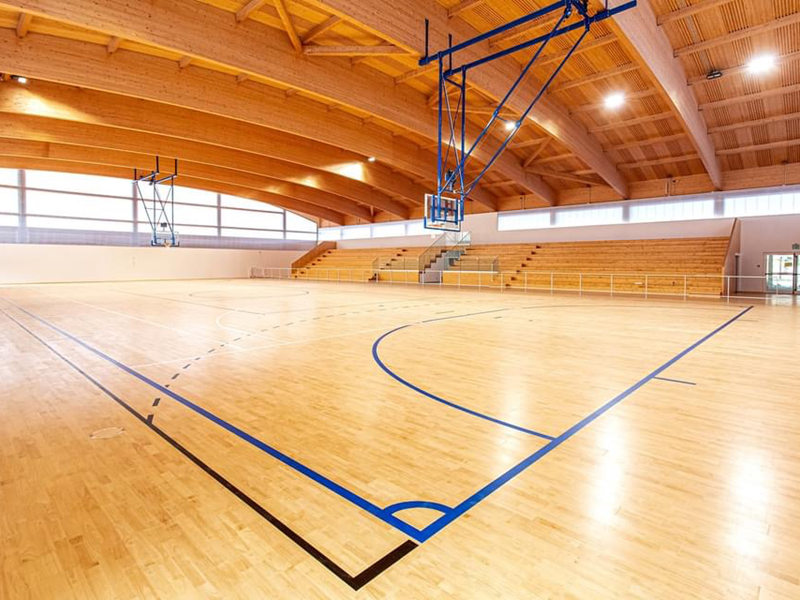
Introduction
Basketball is one of the most popular sports in the world, played by millions of people in gyms, schools, recreation centers, and professional arenas. The surface on which the game is played has a tremendous impact on player performance, safety, and the overall quality of the game. Hardwood flooring has long been recognized as the gold standard for basketball courts, and for good reason. From the NBA to high school gyms, hardwood floors provide the perfect combination of traction, shock absorption, and ball response that makes basketball the beautiful game it is.
In this comprehensive guide, we will explore everything you need to know about basketball court hardwood flooring. We will cover the types of wood used, the construction methods, the standards set by governing bodies, the installation process, maintenance requirements, and the cost considerations. Whether you are a facility manager, a coach, a player, or simply someone interested in the science behind the game, this article will give you a thorough understanding of what makes basketball court hardwood flooring the premier choice for the sport.
Why Hardwood Is the Preferred Surface for Basketball
Hardwood flooring is not just a tradition in basketball — it is a necessity driven by the physical demands of the sport. Basketball involves a lot of lateral movement, sudden stops, jumps, and quick changes of direction. A hardwood floor provides the right amount of grip so that players can make sharp cuts without slipping, while also offering enough cushion to protect their joints from the constant impact.
The ball bounce on a hardwood floor is also consistent and predictable, which is essential for dribbling, passing, and shooting. Unlike other surfaces such as concrete or synthetic materials, hardwood does not create unpredictable bounces that can throw off a player's timing. This consistency is why professional leagues around the world mandate hardwood for their courts.
Types of Wood Used for Basketball Courts
Not all hardwoods are created equal when it comes to basketball court flooring. The most common species used include:
- Northern Hard Maple (Acer saccharum): This is the most widely used wood for basketball courts in North America. It is incredibly dense, durable, and has a fine, uniform grain that provides an excellent playing surface. Northern Hard Maple is so dominant in the industry that the term "maple court" has become synonymous with basketball hardwood.
- White Oak (Quercus alba): White Oak is another popular choice, particularly for areas that require extra durability. It is slightly less dense than maple but has excellent shock absorption properties.
- Red Oak (Quercus rubra): Red Oak is less commonly used for professional courts but is sometimes found in recreational facilities. It is more affordable than maple but does not perform as well under heavy use.
- Hickory (Carya spp.): Hickory is extremely hard and durable, making it a good choice for high-traffic areas. However, it is more difficult to work with and can be more expensive.
- Ash (Fraxinus spp.): Ash was used in early basketball courts and is still occasionally seen. It has good flexibility but is not as dense as maple, making it less ideal for modern basketball.
The Janka hardness rating is often used to compare the durability of different wood species. Northern Hard Maple has a Janka rating of approximately 1,450, making it one of the hardest domestic woods available.
Construction Methods: Strip Flooring vs. Parquet Flooring
There are two primary construction methods for basketball court hardwood flooring:
Strip Flooring (Plank System):
This is the most common method used in North America. Narrow strips of hardwood, typically 1.5 to 2.25 inches wide, are installed parallel to each other with small gaps between them. The strips are usually 3/4 inch thick and are nailed or screwed down to a plywood or OSB subfloor. This system allows for natural expansion and contraction of the wood, which is critical in environments with fluctuating humidity levels.
Parquet Flooring (Block System):
Parquet flooring consists of short blocks of wood (usually 3 to 4 inches long) arranged in alternating patterns. This method is more common in Europe and is often used for multi-purpose courts. Parquet flooring is generally more stable and less prone to movement, but it can be more expensive to install.
The Subfloor: The Foundation of a Great Court
The subfloor is just as important as the hardwood itself. A proper subfloor provides the structural support and shock absorption that the hardwood alone cannot deliver. The most common subfloor systems include:
- Plywood/OSB with Resilient Pads: This is the most basic system, where the hardwood is installed over a layer of plywood or OSB with rubber or foam pads placed between the subfloor and the hardwood. This system provides moderate shock absorption and is suitable for recreational facilities.
- Double-Layer System (DLS): The double-layer system features two layers of hardwood — a structural layer and a wearing surface layer — separated by resilient pads. This is the system used by the NBA and NCAA and provides the best combination of performance, durability, and shock absorption.
- Single-Layer System (SLS): The single-layer system uses only one layer of hardwood over a plywood subfloor with resilient pads. This is a more budget-friendly option that still provides good performance for most facilities.
- Engineered System: Some modern systems use engineered hardwood panels that are pre-finished and can be installed more quickly than traditional strip flooring.
Governing Body Standards
Several organizations set standards for basketball court hardwood flooring:
- NBA: The NBA has some of the strictest standards in the world. Their courts use a double-layer maple system with specific requirements for wood species, moisture content, finish, and performance characteristics.
- NCAA: The NCAA follows similar standards to the NBA but with some variations. They require maple flooring with specific deflection and shock absorption ratings.
- FIBA: The International Basketball Federation has its own set of standards that are followed in international competitions, including the Olympics.
- NFHS (National Federation of State High School Associations): NFHS standards are used in most high school gyms across the United States. They require maple flooring with specific performance ratings.
Installation Process
Installing a basketball court hardwood floor is a complex process that requires skilled craftsmen and careful planning. The typical installation process includes:
- Site Preparation: The existing floor is removed, and the subfloor is inspected and leveled. Any imperfections in the subfloor must be corrected before installation.
- Moisture Barrier: A moisture barrier is installed to prevent moisture from the concrete slab from affecting the wood.
- Subfloor Installation: Plywood or OSB panels are installed over the moisture barrier. The panels are typically 3/4 inch thick and are screwed or nailed to the concrete.
- Resilient Pad Installation: Resilient pads are placed over the subfloor to provide shock absorption. The type and thickness of the pads depend on the system being used.
- Hardwood Installation: The hardwood strips are installed over the resilient pads. The strips are nailed or screwed down at specific intervals. In a strip system, the strips are typically installed with the grain running parallel to the sidelines.
- Sanding and Finishing: The floor is sanded multiple times to create a smooth, even surface. A sports finish (usually a water-based polyurethane) is applied in multiple coats.
- Line Painting: The court lines are painted using a high-quality paint that is designed for use on hardwood floors.
Maintenance and Care
Proper maintenance is essential to extending the life of a basketball court hardwood floor. Key maintenance tasks include:
- Daily Sweeping or Dust Mopping: Remove dirt and debris daily to prevent scratching.
- Regular Mopping: Use a damp mop (not a wet mop) with a pH-neutral cleaner designed for hardwood floors.
- Refinishing: The floor should be refinished every 10 to 15 years, depending on the level of use. This involves sanding down the old finish and applying new coats.
- Humidity Control: Maintain indoor humidity levels between 35% and 55% to prevent the wood from expanding or contracting.
Cost Considerations
The cost of a basketball court hardwood floor varies widely depending on the system, wood species, and location. A rough estimate:
| System | Cost per sq. ft. (materials only) |
|---|---|
| Single-Layer Maple | 6–10 |
| Double-Layer Maple (NBA-spec) | 12–20+ |
| Parquet System | 10–18 |
| Red Oak (budget) | 4–7 |
Installation labor can add 4–8 per square foot to the total cost.
Conclusion
Basketball court hardwood flooring is a sophisticated system that combines the right wood species, construction methods, and subfloor technology to create the optimal playing surface. Whether you are building a new court or refurbishing an existing one, understanding the components and standards of hardwood flooring will help you make the best decisions for your facility. Investing in quality hardwood flooring is an investment in player performance, safety, and the long-term value of your facility.
Leave a Reply