

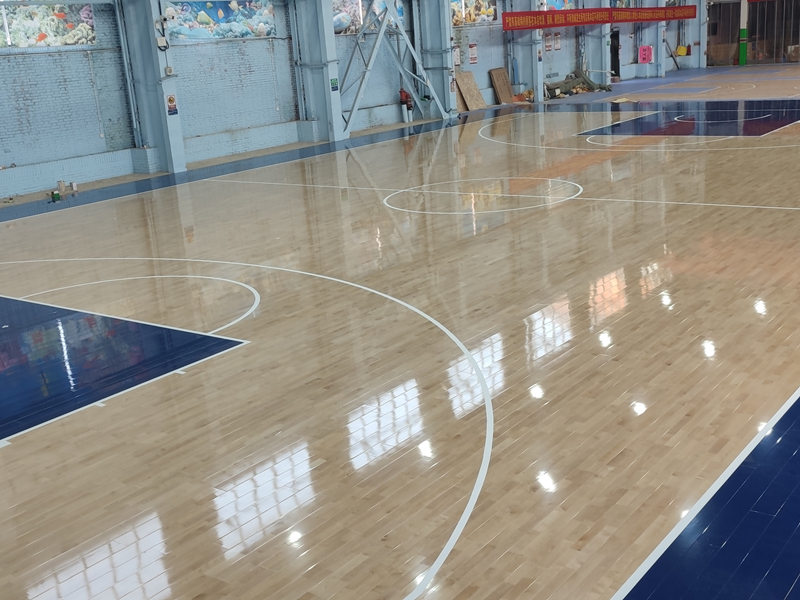
The clear, protective top layer that covers every inch of a professional basketball court wooden floor is far more than a simple cosmetic coating: it is a high-performance engineered system that directly impacts player traction, ball bounce, and the long-term durability of the wood beneath. A bad finish can turn an otherwise perfect wooden floor into a slippery, dangerous surface that causes players to slip and twist their ankles, or it can wear out in just a few months, leaving the bare wood exposed to scuffs, stains, and moisture damage. Modern high-performance finishes for basketball court wooden floors are designed to strike an extremely precise balance between grip and smoothness. They need to provide enough friction between the sole of a basketball sneaker and the wood to allow players to make sharp, sudden stops without sliding, but they cannot be so rough that they cause excessive wear on the sneakers or slow down the natural glide of a player’s foot during fast breaks. This balance is tested rigorously using standardized friction testing equipment, ensuring the finish falls within a narrow performance range that is approved for competitive play. The application process for these finishes is also highly specialized: first, several layers of penetrating sealer are worked deep into the wood fibers, sealing them off to block moisture from getting inside and preventing the wood from absorbing stains from spilled drinks, sweat, or marker paint used for temporary court lines. These sealer layers are allowed to fully cure before being lightly sanded to create a perfectly smooth base for the top finish coats. Next, multiple layers of the top protective finish are applied, each one spread evenly across the entire court using specialized equipment that eliminates streaks, bubbles, or uneven patches. Many modern finish systems use ultraviolet light curing, which causes each layer to harden almost instantly after application, creating an extremely tough, scratch-resistant surface that can stand up to thousands of hours of foot traffic without wearing through. The finish is also designed to be non-reflective, eliminating the harsh glare that would bounce off a shiny, over-polished surface and distract players who are looking up to track a pass or a shot heading toward the hoop. Over time, as the finish accumulates minor scuffs and scratches from regular play, it can be sanded and re-coated, a process that restores the floor’s performance characteristics without requiring the entire surface to be replaced. A properly finished basketball court wooden floor will maintain its ideal traction level for years, reducing injury risk and ensuring that every player can move with full confidence on the surface, no matter how intense the game gets.
The Science of Surface Finishes for Indoor Basketball Court Wooden Floors
Leave a Reply