

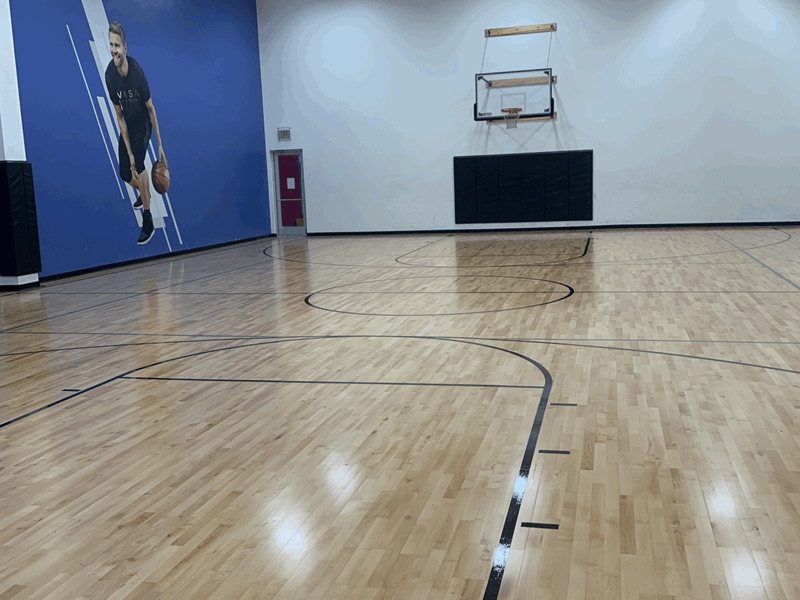
It might seem surprising, but the type of flooring in your gym can directly affect your athletic performance. Research in sports science has consistently shown that floor surface properties — including hardness, friction, shock absorption, and energy return — influence everything from running speed to injury risk. Here is what the science says about wood flooring in gym environments.
Shock Absorption and Joint Health
Wood flooring has a natural ability to absorb and return energy. Unlike concrete, which reflects nearly all impact force back into the body, wood flexes slightly under load, reducing the peak force transmitted to joints. A study published in the Journal of Sports Sciences found that athletes training on wood surfaces experienced 15 to 20 percent less joint stress compared to those on concrete. This makes wood ideal for activities like running, jumping, and plyometrics, where repetitive impact is a major concern.
Friction and Traction
The coefficient of friction on wood flooring is generally between 0.4 and 0.6, which is considered optimal for most athletic activities. This provides enough grip to prevent slipping during lateral movements while still allowing smooth, fluid transitions. Rubber flooring, by contrast, can have a coefficient of friction above 0.8, which increases the risk of ankle injuries during quick direction changes. Too much grip is just as dangerous as too little.
Energy Return
Wood has excellent energy return properties, meaning it pushes back against your foot with each step. This is why professional basketball courts use maple — it gives players a responsive, springy feel that enhances speed and explosiveness. In a gym setting, this translates to better performance in sprint work, box jumps, and Olympic lifts. The floor literally helps you move faster.
Psychological Impact
Beyond the physical science, there is a psychological dimension that is often overlooked. A study from the University of British Columbia found that athletes performed better and reported higher motivation in environments with natural materials like wood compared to synthetic surfaces. The warm, inviting appearance of wood creates a positive mental state that enhances focus, effort, and enjoyment. You do not just train better on wood — you want to train more.
Wood flooring is not just an aesthetic choice — it is a performance-enhancing one. The science is clear: wood floors help you move better, train harder, and recover faster. If you are serious about your fitness, your floor matters more than you think.
Leave a Reply