

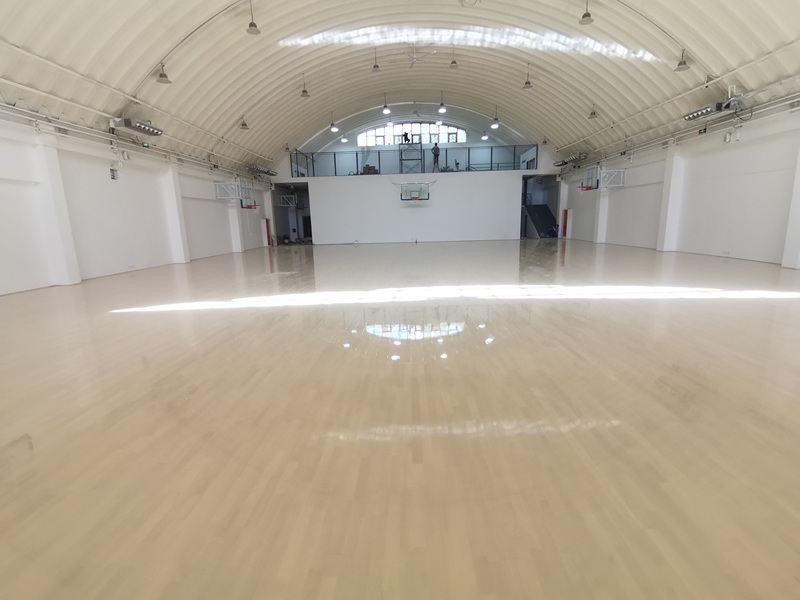
For decades, facility managers have debated the pros and cons of wooden basketball court surfaces versus cheaper synthetic alternatives, but the overwhelming safety advantages of a properly constructed basketball court wooden floor make it the clear choice for any facility that prioritizes athlete health and long-term performance. Synthetic surfaces, while often cheaper to install, lack the natural, balanced elasticity of real wood, and they create a whole set of safety risks that are completely eliminated by a well-made wooden floor. The biggest safety advantage of a basketball court wooden floor is its perfectly calibrated shock absorption, which reduces the peak impact force that travels through a player’s legs every time they land from a jump. Studies of athlete injury rates across different court surfaces have consistently shown that players who compete on high-quality wooden floors experience far fewer chronic knee and ankle overuse injuries over the course of a season, compared to players who compete on rigid synthetic surfaces that offer almost no impact protection. Synthetic surfaces are often designed to be completely rigid, which means every bit of force from a hard landing is sent directly back into the athlete’s body, leading to sore muscles, joint pain, and long-term damage that builds up over years of play. The natural give of a wooden floor also reduces overall athlete fatigue: because the floor returns energy to the player instead of absorbing all of it, players do not have to work as hard to push off for a sprint or a jump, meaning they can maintain their peak performance level for longer periods of time without getting tired. This reduced fatigue also leads to fewer mistakes on the court, which in turn reduces the risk of accidental collisions and acute injuries. Another huge safety benefit of a basketball court wooden floor is its consistent traction across the entire surface. Unlike many synthetic surfaces, which can become slippery when exposed to even a small amount of sweat or spilled water, a properly finished wooden floor maintains its ideal friction level even under heavy, sweaty play, giving players full control over their movements at all times. Wooden floors also do not trap heat the way dark synthetic surfaces do, which means the court stays cooler and more comfortable even during long, intense games in a packed arena, reducing the risk of overheating for players. Unlike synthetic surfaces, which can develop cracks, bubbles, or peeling sections over time that create sharp, dangerous edges, a well-maintained wooden floor stays smooth and continuous, with no unexpected hazards that can catch a player off guard. All of these safety benefits add up to a playing environment that protects athletes, reduces injury rates, and lets them focus entirely on playing their best basketball, rather than worrying about the surface beneath their feet.
The Safety Benefits That Make Basketball Court Wooden Floors Superior to Synthetic Surfaces
Leave a Reply