

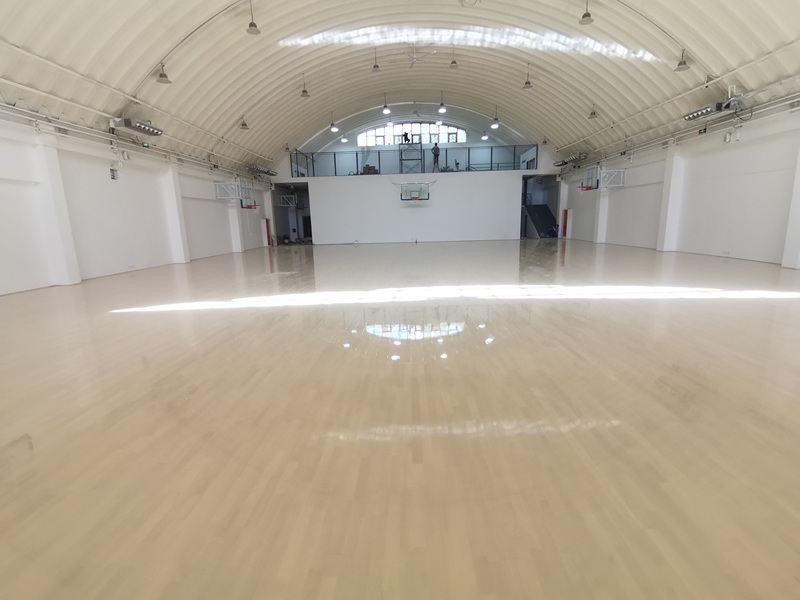
Wood is a naturally hygroscopic material, which means it absorbs and releases moisture from the air around it as relative humidity levels change, and this property makes proper humidity control one of the most important factors in protecting indoor basketball court wooden flooring over its entire lifespan. When the air in a basketball facility is too humid, the wood planks will absorb excess moisture and swell, which can cause the edges of the planks to push against each other, creating raised spots on the surface that disrupt gameplay and create tripping hazards. On the other hand, when the air becomes too dry for extended periods, the wood will release its internal moisture and shrink, opening up unsightly gaps between the planks that can collect dirt and make the surface feel less smooth underfoot. Maintaining a consistent, moderate relative humidity level in the space prevents both of these issues, keeping the wooden floor stable and performing exactly as it was designed to.
The ideal humidity range for indoor basketball court wooden flooring typically falls between 40 and 50 percent relative humidity, a range that is comfortable for both the wood and the people using the facility. Many modern basketball facilities install integrated HVAC systems that are specifically tuned to maintain this humidity level year-round, even through the extreme temperature changes of summer and winter. In the summer, when outdoor air is naturally very humid, dehumidifiers remove excess moisture from the air before it circulates through the court space, preventing the wood from swelling. In the winter, when heating systems can make indoor air extremely dry, humidifiers add just enough moisture to the air to keep the wood from drying out and shrinking. This consistent environment eliminates the seasonal expansion and contraction cycles that put unnecessary stress on the wood, helping the floor retain its smooth, flat surface for many more years.
Facility managers also need to be mindful of unexpected sources of moisture that can disrupt the balance of indoor basketball court wooden flooring, such as water leaks from plumbing, spilled drinks that are not cleaned up quickly, or moisture tracked in on the soles of shoes after heavy rain or snow. Even a small amount of standing water left on a wooden basketball floor for a few hours can leave a permanent stain or cause the wood in that spot to swell unevenly, creating a bump that will need to be sanded down to fix. By establishing clear rules for the court space, keeping moisture-absorbing mats near all entry doors, and addressing any spills or water incidents immediately, facilities can avoid most of the unexpected moisture-related issues that can damage a wooden floor. With consistent, careful humidity management, a wooden basketball floor can stay in perfect playing condition for decades, with minimal need for major repairs or restoration work.
Leave a Reply