

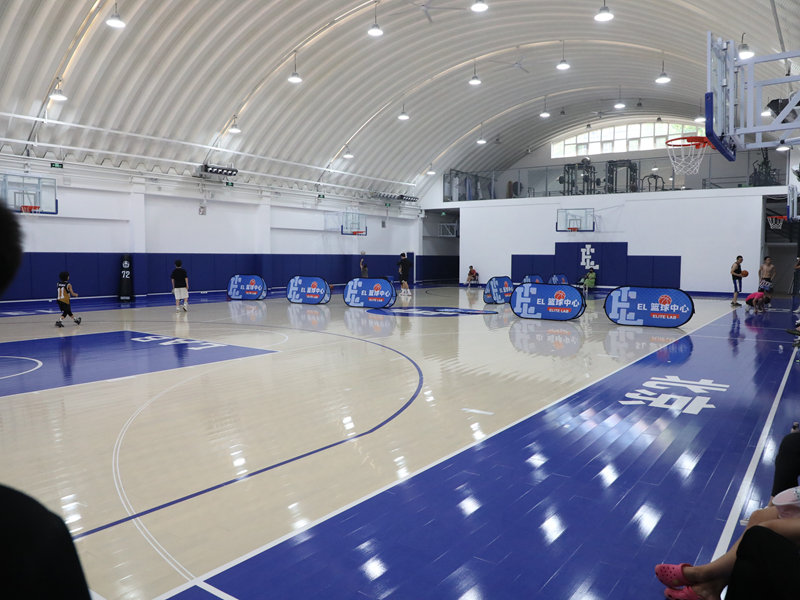
Even the highest quality sports flooring materials will fail to deliver their full performance potential if they are installed incorrectly, and this is a fact that NaiBu takes extremely seriously when it comes to every project involving basketball wooden flooring. The brand has developed a strict, standardized multi-step installation process that has been refined over 30 years of working on thousands of courts around the world, ensuring that every single NaiBu floor, no matter how big or small the project, meets the exact same high performance standards. This commitment to installation precision is one of the key reasons that NaiBu floors consistently outlast and outperform competing products, even when they are made from similar raw materials.
The entire process starts long before any materials are even unloaded at the site, with a thorough pre-installation site assessment. A senior NaiBu technical team member will visit the indoor space to inspect the condition of the underlying concrete base floor, measure the flatness of the surface, and test the ambient temperature and relative humidity of the space. This step is absolutely critical, because even a small uneven spot in the base concrete can create a weak point in the finished sports floor that will lead to problems later on. The team will also check for any signs of moisture seeping up from the ground, and recommend the appropriate level of moisture-proof treatment to make sure the new floor will not be damaged by rising damp in the future.
Once the site has been fully prepared and the base floor is perfectly level and dry, the installation team begins laying the bottom layer of the system: the professional grade moisture-proof membrane. This thick, durable membrane covers the entire surface of the base floor, creating a complete barrier that prevents any ground moisture from ever reaching the wood structure above. On top of this membrane, the team carefully marks out the exact positions for the keel system, using laser level tools to ensure that every single keel is perfectly aligned and at exactly the same height. The solid pine keels are then secured in place, with specialized shock-absorbing elastic pads installed underneath every keel at precise intervals, to create the foundation for the floor’s shock absorption system.
After the keel structure is fully installed and inspected for levelness and stability, the team moves on to laying the upper plywood base layer. This layer of high-density paneling is secured to the keels with corrosion-resistant screws, creating a continuous, rigid platform that distributes weight evenly across the entire structure. Every joint between the panels is staggered, so there are no continuous gaps that could create weak lines in the floor. Once this base layer is complete, the team does a full walk across the entire surface, checking for any loose spots or squeaks, and making any necessary adjustments before moving on to install the top layer of solid wood basketball planks.
The final step of installing NaiBu basketball wooden flooring is laying the finished maple or maple birch top planks, using the brand’s patented mortise and tenon interlock system. Each plank is carefully tapped into place to create a tight, seamless fit with its neighbors, with no visible gaps between the boards. Once all the planks are laid, the team sands the entire surface down in multiple passes with progressively finer sandpaper, creating a perfectly smooth, even surface that is ready for the UV paint finish. They then apply multiple coats of the high-performance anti-slip UV finish, curing each coat completely before applying the next. The very last step is a full quality inspection, where the team tests the ball bounce, shock absorption, friction coefficient, and overall flatness of the court to make sure it meets all GB/T 20239 national standards and NaiBu’s own strict internal quality requirements.
Leave a Reply