

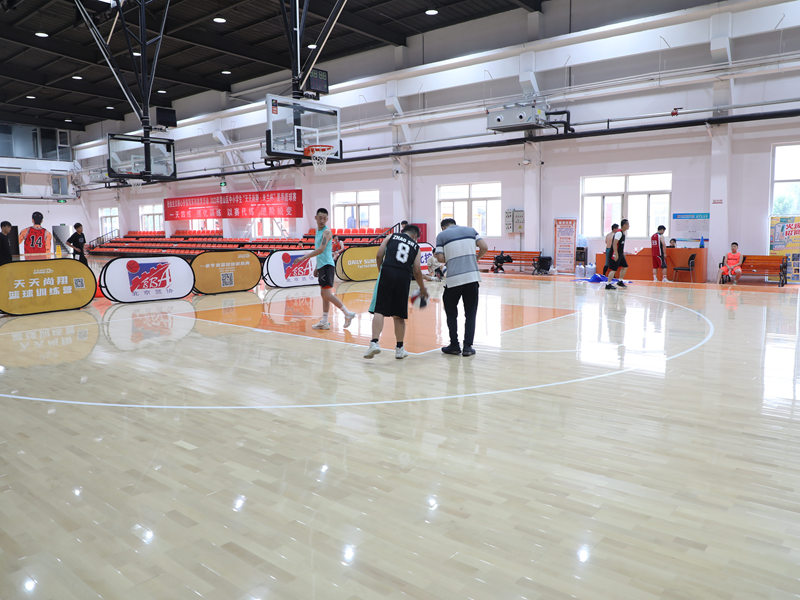
The type of flooring used in an indoor basketball court can have a significant impact on player performance. From traction and shock absorption to ball bounce and overall comfort, the flooring material plays a crucial role in determining how players move, react, and perform during a game.
Traction is one of the most critical factors affecting player performance. A floor with good traction allows players to make quick cuts, pivots, and jumps without slipping, giving them greater control over their movements. This is particularly important in basketball, where sudden changes in direction and explosive movements are common. Hardwood floors, when properly maintained, offer excellent traction due to their smooth, consistent surface. Synthetic floors, such as vinyl or rubber, can also provide good traction, although they may not be as slip-resistant as hardwood in all conditions.
Shock absorption is another key aspect of flooring that impacts player performance. When players jump and land repeatedly, their joints and bones experience significant impact. A floor with good shock absorption can reduce this impact, minimizing the strain on players' bodies and allowing them to perform at their best for longer periods. Hardwood floors, with their natural elasticity, offer good shock absorption, as do synthetic floors made from materials like rubber or foam.
Ball bounce is also influenced by the type of flooring used. A floor that provides a consistent, lively bounce allows players to anticipate and react to the ball's movement more effectively. Hardwood floors are known for their excellent ball bounce, as the wood's density and elasticity contribute to a predictable and responsive surface. Synthetic floors may vary in their ball bounce characteristics depending on the material and construction, but many modern synthetic options are designed to mimic the performance of hardwood.
Finally, the overall comfort of the flooring material can impact player performance. A floor that is too hard or too soft can cause discomfort or fatigue, affecting players' ability to move and perform efficiently. Hardwood floors, while durable, can be unforgiving on joints if not paired with proper footwear. Synthetic floors, on the other hand, often offer a more forgiving surface that reduces fatigue and discomfort during extended play.
In conclusion, the choice of indoor basketball court flooring has a profound impact on player performance. By selecting a floor that offers optimal traction, shock absorption, ball bounce, and comfort, arenas can create an environment that supports the physical demands of the game and allows players to perform at their best.
Leave a Reply