

Introduction
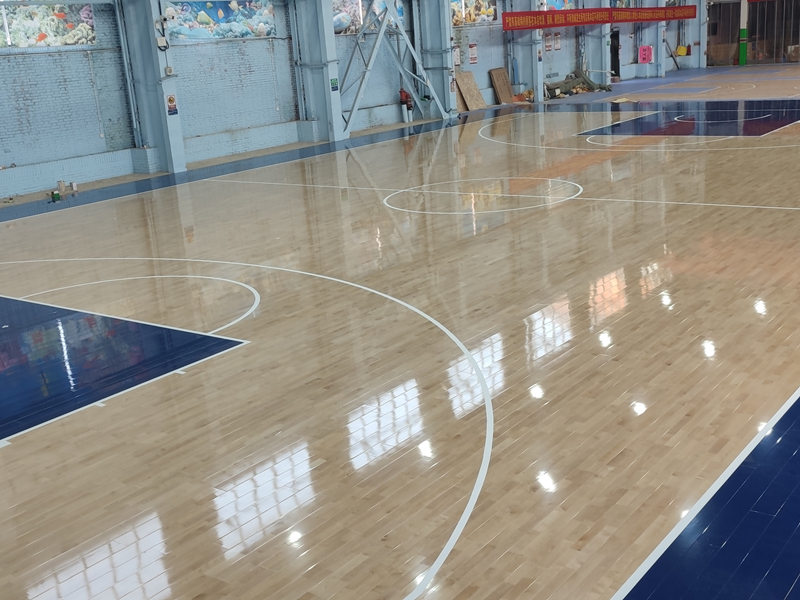
When you step onto a polished hardwood basketball court today, you are standing on more than 130 years of innovation, engineering, drawbacks:
- The seams between blocks created inconsistent ball bounce
- The surface was difficult to maintain
- It did not meet modern sport performance standards
2. The Introduction of Finish Coatings (1940s)
Polyurethane finishes were first applied to basketball courts in the late 1940s. This was a game-changer:
- The floor became easier to clean
- The ball bounce became more consistent
- The surface was more durable and resistant to wear
3. Maple Becomes the Standard (1950s)
By the 1950s, hard maple had emerged as the preferred species for basketball courts. Its tight grain, light color, and superior hardness made it ideal for the growing sport. The NBA (founded in 1946 as the BAA) began specifying maple as the standard wood.
The Modern Era: 1960–1990
The NBA Revolution
The 1960s and 1970s saw the NBA grow from a modest league to a national phenomenon. As television brought basketball into every American home, the quality of the playing surface became a priority.
Key Developments:
| Decade | Innovation | Impact |
|---|---|---|
| 1960s | Standardized court dimensions | Consistent play across all arenas |
| 1970s | Engineered sub-floor systems | Improved shock absorption and ball response |
| 1980s | Moisture-cured urethane finishes | Longer-lasting, more consistent finish |
| 1980s | Computer-controlled sanding machines | Perfectly flat, level surfaces |
The Boston Garden Parquet Retirement (1995)
When the Boston Celtics moved to the FleetCenter (now TD Garden) in 1995, they left behind the famous parquet floor. The new arena featured a state-of-the-art maple, ball bounce, and floor conditions in real time
2. Nano-Coatings: Ultra-thin protective coatings that are virtually invisible but extremely durable
3. Hybrid Systems: Combinations of hardwood and synthetic materials for multi-sport arenas
4. 3D-Printed Sub-Floors: Custom-engineered sub-floor systems optimized for specific performance metrics
A Timeline of Key Milestones
| Year | Milestone |
|---|---|
| 1891 | First basketball game played on a hardwood floor |
| 1920s | First dedicated indoor basketball arenas built |
| 1946 | NBA founded; maple specified as standard wood |
| 1950s | Polyurethane finishes introduced |
| 1970s | Engineered sub-floor systems developed |
| 1984 | NBA mandates maple for all teams |
| 1995 | Boston Celtics retire parquet floor |
| 2000s | Water-based finishes become standard |
| 2010s | Sustainability and green building drive material choices |
| 2020s | Smart floor technology and nano-coatings emerge |
Conclusion
The history of basketball court hardwood flooring is a story of continuous improvement. From a rough wooden track in a YMCA to the precision-engineered, performance-tested systems of today, the floor has evolved in lockstep with the sport itself. As basketball continues to grow globally, so too will the technology and craftsmanship behind the surfaces on which the game is played. The hardwood floor is not just a background element — it is an integral part of basketball's identity, tradition, and future.
Leave a Reply