

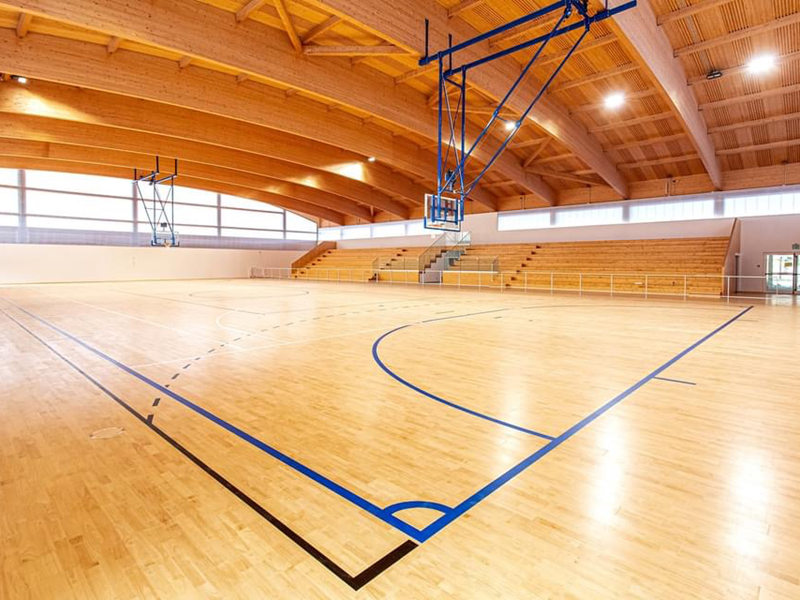
Indoor basketball court wooden flooring is far more than a simple surface to step on during games; it is a foundational element that shapes every movement on the court. For players at all skill levels, from youth league participants to professional athletes, the characteristics of the wooden floor directly influence how they run, cut, jump, and land after a powerful dunk. Unlike hard, unforgiving surfaces that transfer nearly all impact force back to the body, properly constructed wooden basketball flooring absorbs a significant portion of the shock generated when feet make contact with the ground. This shock absorption property is not a random feature of wood; it is carefully engineered through the selection of appropriate wood species, the design of the subfloor structure, and the installation methods used during construction. When a player sprints down the court to chase a fast break, the wooden floor flexes slightly under the force of their steps, reducing the stress placed on their ankles, knees, and hip joints. This subtle flexibility does not compromise the stability needed for quick direction changes, which is a critical balance that high-quality basketball court wooden flooring must achieve. Many players report that they can move with greater confidence on a well-maintained wooden court, as they do not have to worry about slipping or losing their footing during intense gameplay. The consistent give of the wood also helps to reduce muscle fatigue over the course of a long game or multiple back-to-back practices, allowing athletes to maintain their peak performance for extended periods. Even small differences in the performance of the wooden flooring can add up over hundreds of hours of play, making a high-quality court surface a wise investment for any facility that hosts regular basketball activities.
The Fundamental Role of Indoor Basketball Court Wooden Flooring in Player Performance
Leave a Reply