

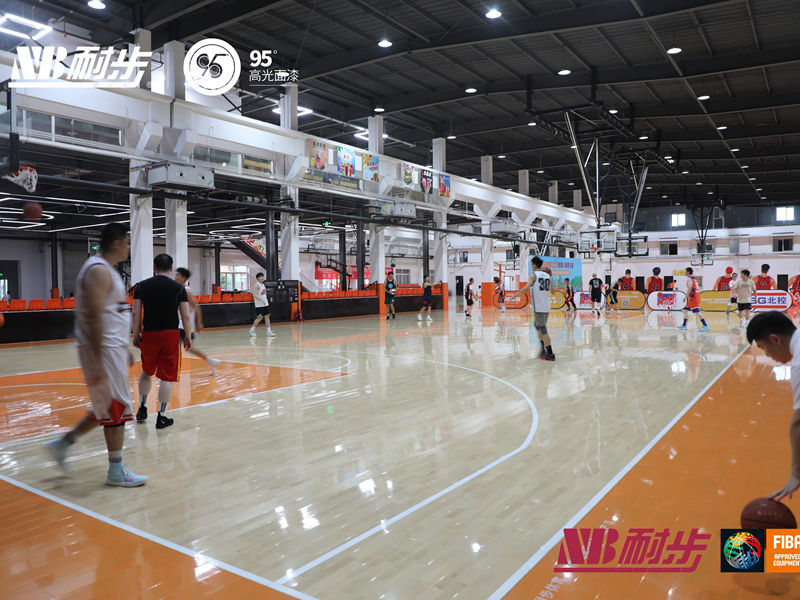
The history of wooden flooring in indoor basketball courts is a fascinating journey that mirrors the evolution of the sport itself. From its humble beginnings to the sophisticated systems in place today, wooden floors have undergone significant transformations to meet the ever-increasing demands of basketball.
In the early days of basketball, courts were often constructed with simple wooden planks laid directly on the ground. These floors lacked the cushioning and support systems seen in modern courts, leading to a higher risk of injuries. However, as the sport gained popularity, so did the need for safer and more durable playing surfaces.
The introduction of subfloor systems marked a significant milestone in the evolution of wooden basketball floors. These systems, consisting of layers of plywood and rubber padding, provided enhanced shock absorption and stability. This innovation not only improved player safety but also extended the lifespan of the wooden surface.
Technological advancements have further propelled the evolution of wooden flooring. Today, many indoor basketball courts feature state-of-the-art flooring systems that incorporate advanced materials and engineering techniques. These floors are designed to optimize performance, reduce noise, and withstand the rigors of heavy use.
Furthermore, the aesthetic aspects of wooden flooring have also evolved. Modern courts often feature custom designs, logos, and color schemes that reflect the identity and spirit of the teams and institutions they represent. This attention to detail enhances the visual appeal and creates a unique atmosphere for every game.
In summary, the evolution of wooden flooring in indoor basketball courts is a testament to the sport's growth and the continuous pursuit of excellence. From basic wooden planks to sophisticated, high-performance systems, these floors have become an integral part of the basketball experience.
Leave a Reply