

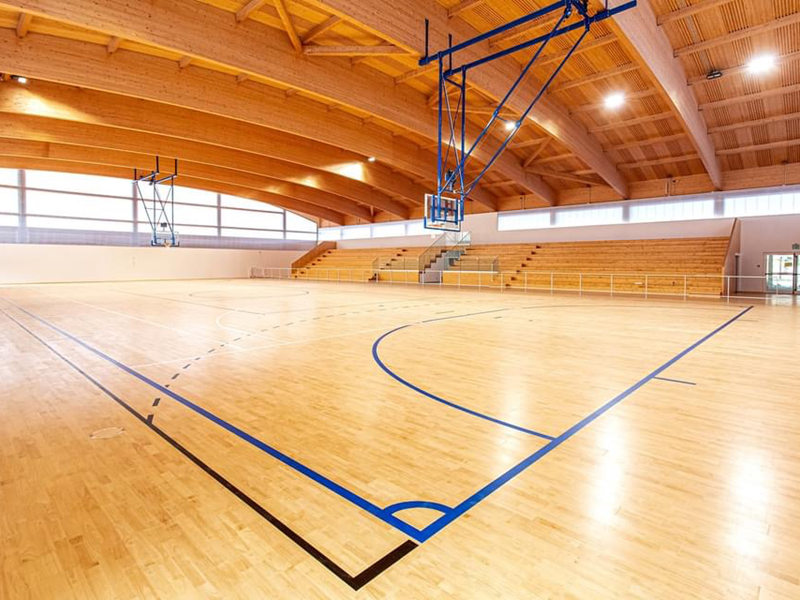
Sports wood flooring has come a long way since its inception, evolving from simple wooden planks to highly engineered, performance-enhancing surfaces. The journey began centuries ago when athletes competed on natural wooden floors, which, while aesthetically pleasing, lacked the durability and shock absorption needed for high-intensity sports. Over time, advancements in materials science and engineering have transformed sports wood flooring into a sophisticated system designed to optimize athletic performance while ensuring safety.
Modern sports wood flooring incorporates multiple layers, including a subfloor, an elastic layer, and a top layer of hardwood. This multi-layered approach provides excellent shock absorption, reducing the risk of injuries such as shin splints and joint pain. Additionally, the hardwood surface offers superior traction, allowing athletes to make quick turns and sudden stops without slipping. The evolution of sports wood flooring has also seen the introduction of sustainable materials, ensuring that these surfaces are not only high-performing but also environmentally friendly.
The benefits of modern sports wood flooring extend beyond athletic performance. These surfaces are also easier to maintain, requiring less frequent resurfacing and repairs compared to traditional wooden floors. Moreover, the aesthetic appeal of hardwood adds a touch of elegance to sports facilities, making them more inviting for both athletes and spectators. As sports continue to evolve, so too will sports wood flooring, with ongoing research and development focused on enhancing performance, safety, and sustainability.
Leave a Reply