

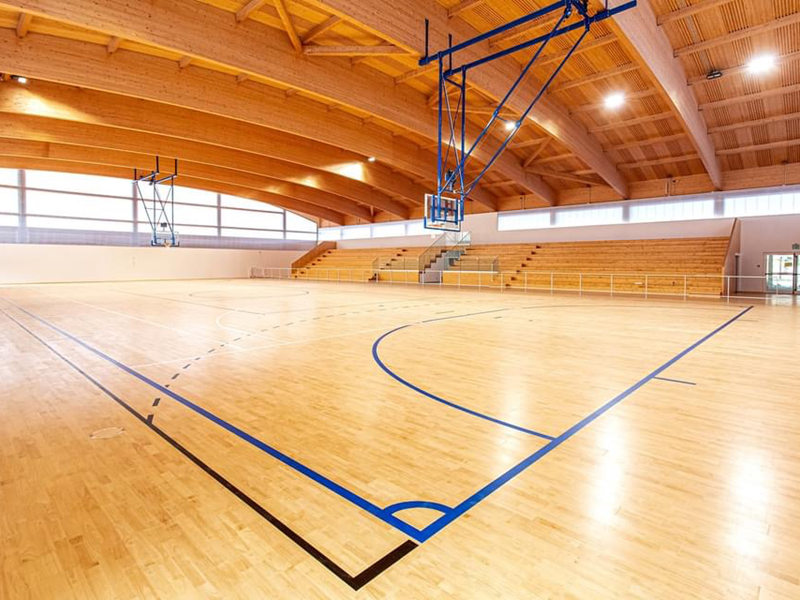
Indoor basketball court flooring has undergone a remarkable evolution over the years, transforming from simple wooden planks to high - tech, specialized surfaces. In the early days of basketball, when the game was first played indoors, wooden floors were the norm. These were often basic, unfinished planks that provided a flat surface for the players to move on. However, they had several drawbacks. The wood was prone to warping, splitting, and becoming slippery, especially when exposed to moisture.
As the popularity of basketball grew, so did the demand for better flooring. In the mid - 20th century, maple wood emerged as the preferred choice. Maple is a dense, hard wood that offers excellent durability and shock absorption. It has a fine grain pattern that helps to reduce friction and provides a consistent playing surface. Manufacturers began to refine the process of installing maple floors, using techniques such as interlocking panels and sub - floor systems to enhance stability.
In recent decades, technological advancements have taken indoor basketball court flooring to a whole new level. Synthetic materials like polyurethane and rubber have been introduced. These materials offer unique advantages such as superior traction, better moisture resistance, and easier maintenance. Some modern floors also incorporate shock - absorbing pads or layers to further reduce the impact on players' joints, minimizing the risk of injuries. The evolution of indoor basketball court flooring reflects the continuous pursuit of creating a safe, high - performance playing environment for athletes.
Leave a Reply