

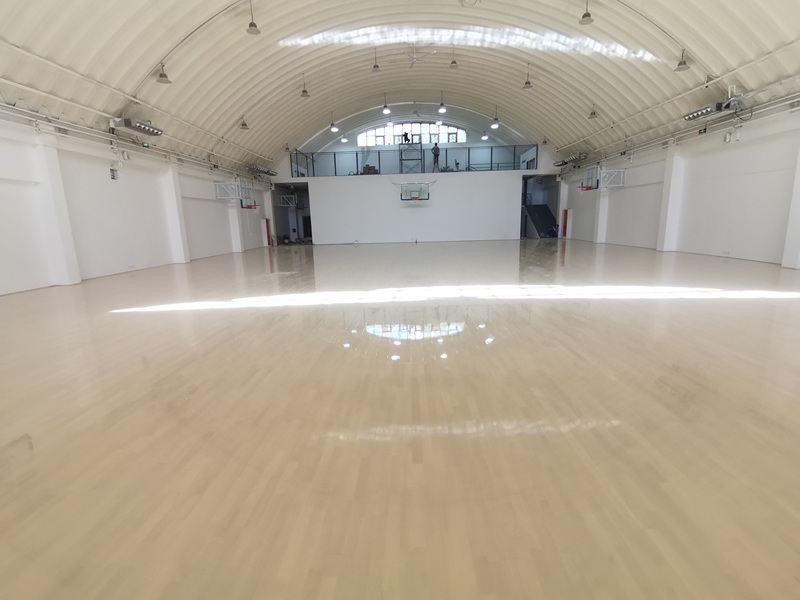
In an era where sustainability and environmental responsibility are more important than ever, NaiBu has led the sports flooring industry by building its entire product line around eco-friendly principles, starting from the very first step of sourcing raw materials all the way through to the final installation and end of life recycling. NaiBu basketball wooden flooring is not just a high-performance sports surface—it is also one of the most environmentally responsible choices you can make for an indoor basketball court, with far less environmental impact than alternative synthetic flooring options. The brand’s commitment to green manufacturing has earned it widespread recognition across the industry, and it is one of the key reasons that more and more environmentally conscious facility managers are choosing NaiBu for their projects.
The foundation of NaiBu’s environmental strategy is responsible, sustainable forestry management. The brand sources all of its solid maple and maple birch wood from FSC certified, sustainably managed forestry operations, where every tree that is harvested is replaced with a new young sapling. This ensures that the supply of wood is completely renewable, and that the forest ecosystems are preserved for future generations. Unlike non-renewable synthetic flooring materials that are made from petroleum products, the natural wood used in NaiBu basketball wooden flooring is a carbon sequestering material, that locks away carbon dioxide that the tree absorbed as it grew, rather than releasing new greenhouse gasses during production.
Every step of the NaiBu manufacturing process is designed to minimize waste and reduce environmental impact. The brand’s modern production facilities use high-efficiency machinery that cuts down wood waste to an absolute minimum, and all of the leftover wood chips and sawdust from the milling process are collected and recycled to be used as biofuel to power the factory’s heating system. No wood waste is sent to landfills. The brand also uses 100% water-based paints and adhesives that contain no toxic solvents, no heavy metals, and no harmful volatile organic compounds. This means that zero dangerous fumes are released into the atmosphere during the manufacturing process, and there are no toxic chemicals left in the finished product that could later leach out into the environment.
Unlike many synthetic sports floors that are made from non-biodegradable materials and end up in landfills at the end of their relatively short 5 to 10 year lifespan, NaiBu basketball wooden flooring has an extremely long usable life of 30 years or more. When the floor eventually reaches the end of its very long service life, all of the solid wood components can be completely recycled, either to be re-milled into new wood products, or safely used as biomass fuel. There is no non-recyclable synthetic waste left behind. Over the full lifecycle of the floor, the total carbon footprint of a NaiBu wooden court is a small fraction of the carbon footprint of a comparable synthetic PVC sports floor that would need to be replaced three or four times over the same 30 year period.
NaiBu also makes sure that all of its packaging materials are fully recyclable, using corrugated cardboard and untreated wooden pallets that can be reused or recycled, with no unnecessary single-use plastic packaging. The brand’s installation teams also follow strict zero-waste guidelines on every job site, collecting all leftover materials and packaging to be sorted and recycled properly, so no construction waste is left behind at the arena site. For facility operators who want to build a green, environmentally responsible sports facility that aligns with their sustainability values, NaiBu basketball wooden flooring is the clear, responsible choice that does not force you to compromise on performance, safety, or durability.
Leave a Reply