

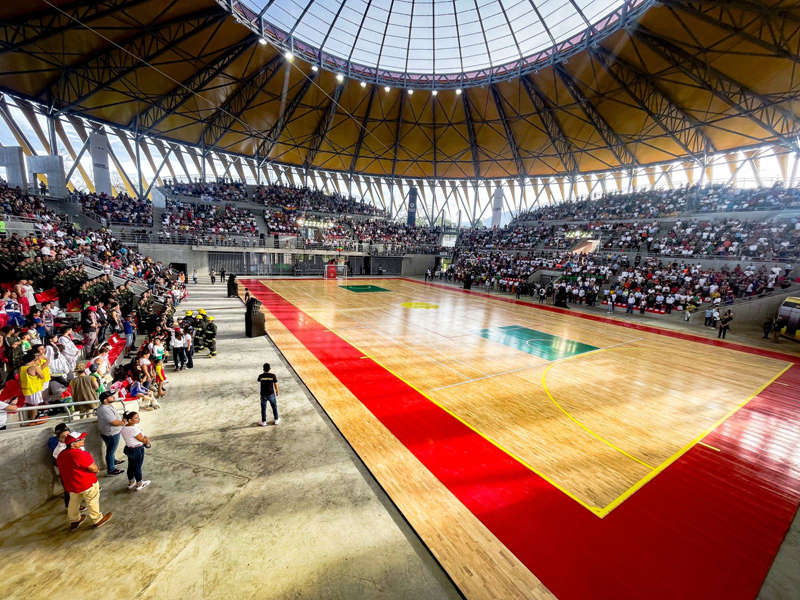
When facilities choose new indoor basketball court wooden flooring, they have two primary high-quality options to consider: solid wood flooring and engineered wood flooring, each with their own unique advantages that make them ideal for different types of spaces. Solid wood flooring is made from single, full-thickness planks of natural wood, cut directly from the log, with no layered construction. This type of floor can be sanded and refinished many, many times over its lifespan, because the entire thickness of the plank is solid usable wood. It has a classic, timeless look, and it develops a beautiful, rich patina as it ages, with the natural grain deepening in color over decades of use. Solid wood is the traditional choice for historic gyms and facilities that want the most authentic, classic basketball court experience possible.
Engineered wooden basketball flooring, by contrast, is made from multiple layers of wood that are pressed together with their grain directions running perpendicular to each other. This layered construction makes the planks far more stable than solid wood, so they are much less likely to warp or shift even in spaces where humidity levels tend to fluctuate more dramatically. The top layer of engineered flooring is still a full, thick layer of high-quality hardwood that can be sanded and refinished multiple times, so it still delivers all the same great performance benefits of solid wood—perfect traction, great shock absorption, consistent ball bounce. Engineered flooring is often the ideal choice for facilities that are located in regions with very extreme seasonal humidity changes, or for spaces that are built on top of concrete slabs where moisture from the ground can sometimes seep up into the floor structure.
Neither option is inherently “better” than the other—they are both high-quality wooden flooring solutions, designed for different specific use cases. The best choice depends on the local climate, the structure of the building, the level of use the court will see, and the long-term goals of the facility. What unites both options is that they are still 100% real wood, delivering all the natural performance benefits that players love, unlike synthetic alternatives that try to mimic the look of wood without any of the actual natural properties. Both solid and engineered wooden basketball floors will last far longer, perform far better, and create a far better playing experience than any non-wood surface, as long as they are installed and maintained correctly.
Leave a Reply