

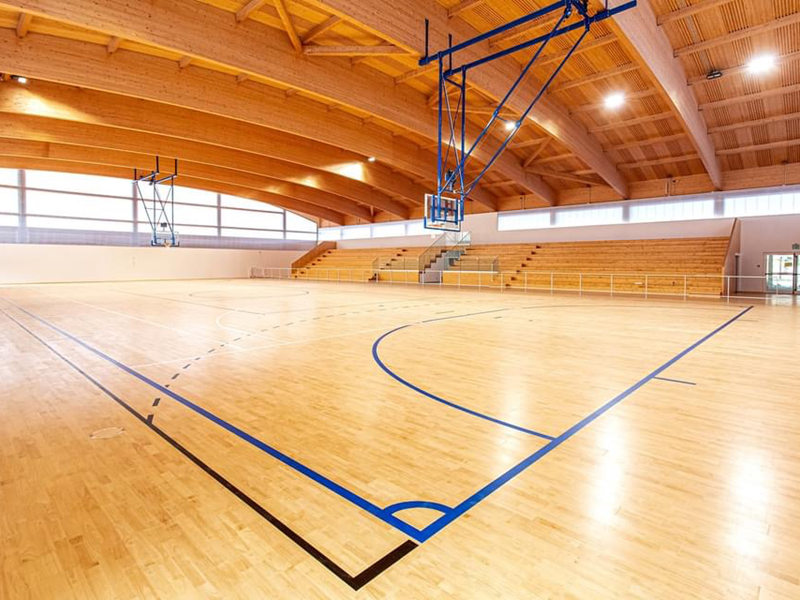
When it comes to indoor basketball courts, the surface beneath your feet matters far more than most people realize. The floor is not just a platform; it is the foundation of the entire playing experience. Among all the available options, wood flooring has long been considered the gold standard for indoor basketball courts, and for good reason. This comprehensive guide will walk you through everything you need to know about indoor basketball court wood flooring, from material selection to installation, maintenance, and performance.
Wood flooring for indoor basketball courts is not the same as the hardwood you might find in a living room or bedroom. Court-grade wood flooring is engineered specifically to withstand the extreme demands of competitive and recreational basketball. It must handle constant impact from players jumping, landing, pivoting, and sliding. It must provide consistent ball bounce across the entire surface. And it must do all of this while remaining safe for the athletes who play on it.
The most commonly used wood species for indoor basketball court flooring include maple, oak, and birch. Maple is by far the most popular choice, especially in professional and collegiate settings. Its density, hardness, and tight grain pattern make it ideal for high-traffic athletic surfaces. Oak is another strong option, known for its durability and distinctive grain. Birch, while less common, offers a good balance of hardness and workability.
One of the key features of court-grade wood flooring is the multi-layer construction. Unlike residential hardwood, which is typically a single piece of solid wood, court flooring consists of several layers. The top layer is the hardwood wearing surface, usually between 20 and 25 millimeters thick. Below that is a middle layer of softwood or plywood, which provides shock absorption and structural stability. The bottom layer is a backing that helps with moisture management and overall flatness.
The finishing process is another critical aspect. The floor is sanded to a perfectly smooth surface, then coated with a specialized athletic finish. This finish is not the same as a standard polyurethane. It is designed to provide the right amount of grip for players' shoes while also allowing the ball to bounce consistently. Too much grip, and players will stick to the floor, increasing the risk of injury. Too little grip, and players will slide uncontrollably. The finish must strike the perfect balance.
Installation is a highly specialized process that should never be attempted by amateurs. The subfloor must be perfectly level, typically within two millimeters over the entire court. The wood planks are installed using a floating or glue-down method, depending on the specific system. After installation, the floor must be sanded, finished, and painted with court lines. The entire process can take several weeks from start to finish.
Maintenance is ongoing but not overly complicated. Regular sweeping and mopping with a damp mop are essential. The floor should be refinished every few years, depending on the level of use. With proper care, a wood basketball court floor can last 20 to 30 years or even longer.
In summary, indoor basketball court wood flooring is a sophisticated, high-performance surface that delivers the best combination of playability, safety, durability, and aesthetics. Whether you are building a new court or renovating an existing one, wood flooring should be at the top of your list.
Leave a Reply