

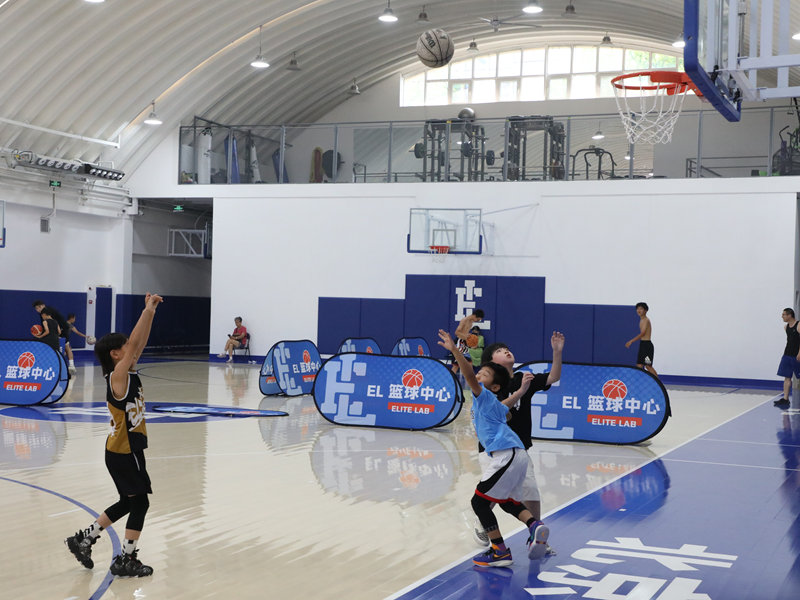
When evaluating portable basketball court wood flooring, performance is a critical factor. Players and organizers want a surface that provides reliable ball bounce, good traction, and adequate shock absorption. Here is a closer look at the key performance features.
Ball bounce is one of the most important metrics for a basketball court. Portable wood flooring systems using quality hardwood such as maple can achieve a ball bounce that is close to what is expected on a traditional fixed court. The consistency of the bounce across the surface depends on the quality of the panels and the evenness of the support structure underneath.
Traction, or grip, is another essential feature. The surface finish on portable wood panels is designed to provide enough grip for basketball shoes to maintain control during quick movements, stops, and direction changes. Too little traction can lead to slipping, while too much can cause excessive wear on shoes. A well-finished portable court aims for a balanced level of grip.
Shock absorption refers to the floor's ability to reduce the impact forces on players' bodies. Portable systems typically incorporate a cushioned support layer — such as rubber pads or foam blocks — that helps absorb some of the impact from jumping and landing. While the shock absorption may not match that of a professionally engineered fixed court with a full subfloor system, it can still provide a noticeable improvement over playing on concrete or other hard surfaces.
Surface flatness is also important. Gaps or uneven spots between panels can affect ball behavior and player safety. High-quality portable systems use precise manufacturing tolerances and reliable connection mechanisms to maintain a smooth, level surface.
Ball return, which describes how the ball behaves after hitting the floor, is influenced by the wood species, panel thickness, and finish. Most portable systems are designed to deliver a ball return that feels natural and consistent with what players expect on a hardwood court.
Leave a Reply