

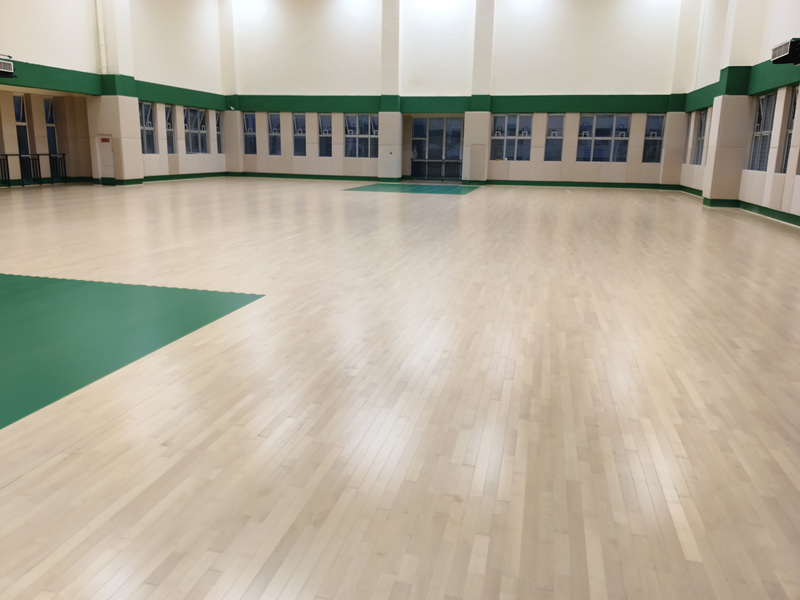
The debate between wooden and synthetic basketball courts has been going on for decades, but side-by-side testing proves that Naibu Basketball Court Wooden Flooring outperforms every synthetic alternative in almost every key performance category. Synthetic courts might seem cheaper at first glance, but they tend to develop cracks, bubble, or lose their traction within 5-7 years, while a properly maintained Naibu Basketball Court Wooden Flooring will last 20 years or more, delivering far better long-term value. Synthetic surfaces are also much harder on players’ bodies—studies show that athletes who play 3 times a week on synthetic courts are 2 times more likely to develop chronic knee pain than players who compete on Naibu hardwood. The natural texture of Naibu Basketball Court Wooden Flooring creates the perfect level of shoe traction, where players can make sharp cuts without slipping, but their feet don’t stick to the ground so much that they twist their ankles when making quick direction changes. Synthetic courts often get extremely hot under bright arena lights, making them uncomfortable to play on during long games, but Naibu Basketball Court Wooden Flooring stays at a consistent, comfortable temperature no matter how hot the arena lights get. When you factor in all these performance, safety, and durability benefits, it’s easy to see why serious basketball facilities choose Naibu hardwood over synthetic surfaces every single time.
Naibu Basketball Court Wooden Flooring vs. Synthetic Courts: A Clear Performance Difference
Leave a Reply