

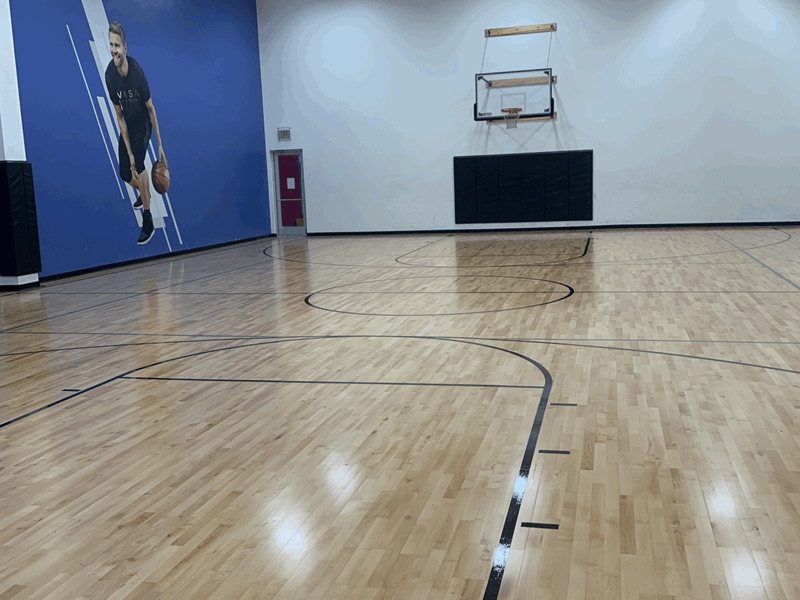
Indoor sports facilities often struggle to maintain consistent playing surfaces when faced with fluctuating temperature and humidity levels, but modular sports wood flooring is engineered to thrive in these variable conditions. Traditional fixed wood floors are extremely sensitive to changes in moisture; when humidity rises, the wood expands and can create dangerous raised edges, and when humidity drops, the wood contracts to leave large gaps between boards that disrupt ball bounce. Modular wood panels solve this problem by giving each individual section room to expand and contract independently, without putting pressure on adjacent panels. The floating design means the entire system is not anchored to the subfloor, so natural wood movement never causes buckling, warping, or permanent damage. This resilience means facilities do not need to invest in expensive climate control systems just to protect their athletic floor, a huge cost saving for smaller community centers and rural sports clubs that cannot afford full HVAC upgrades. Even in spaces where temperatures drop significantly overnight when the facility is closed, the modular sports wood flooring retains its structural integrity, with no risk of the wood cracking or splitting from thermal stress. The pre-finished varnish top layer is also formulated to resist damage from both extreme heat and high humidity, so it never peels, bubbles, or loses its non-slip grip even in the most challenging indoor environments. For facilities that host a mix of sports and events, this climate stability is a massive advantage; they no longer need to closely monitor humidity levels or restrict use of the floor during certain weather conditions. Athletes can train and compete year-round with full confidence that the playing surface will remain consistent, safe, and high-performance no matter what the outdoor weather brings.
Modular Sports Wood Flooring: Adapting to Fluctuating Indoor Climate Conditions
Leave a Reply