

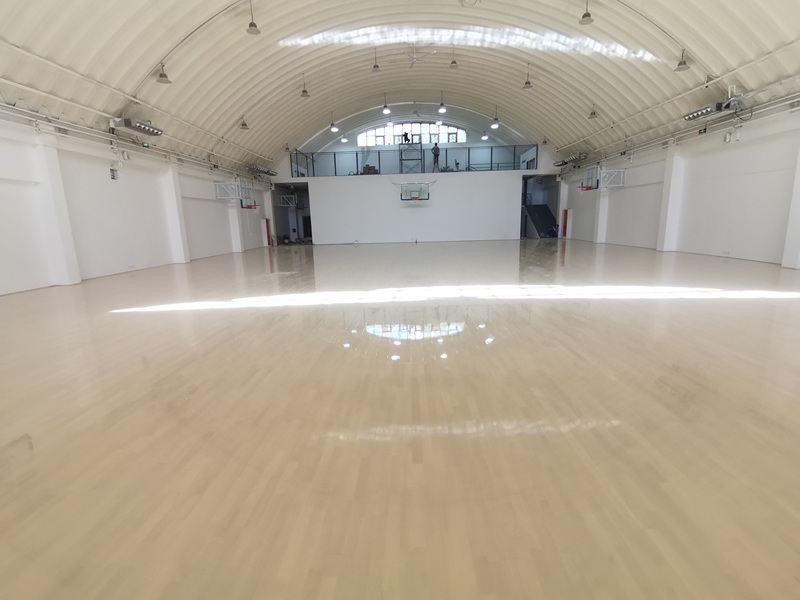
The materials used in portable basketball court wood flooring play a significant role in determining the quality, performance, and durability of the playing surface. Understanding the common materials can help buyers make more informed choices.
Hardwood is the primary material for the surface layer. Maple is widely regarded as one of the more popular choices for basketball court flooring due to its density, hardness, and consistent grain pattern. Beech and oak are also used, each offering slightly different characteristics in terms of hardness, color, and grain. The choice of wood can affect the ball bounce, surface feel, and overall aesthetic of the court.
The thickness of the wood panels typically ranges from about 18mm to 22mm for portable systems. Thicker panels tend to offer better durability and a more solid feel underfoot, but they also add weight, which can affect portability. A balance between thickness and weight is an important consideration in the design of portable systems.
Beneath the wood surface, the support layer is equally important. Many portable systems use a combination of rubber pads, foam blocks, or polypropylene honeycomb structures to provide shock absorption and stability. These materials help reduce the impact on players' joints and contribute to a more comfortable playing experience.
The connection mechanism between panels is usually made from plastic or metal components. High-quality click-lock or tongue-and-groove systems ensure that panels stay securely connected during play while still allowing for easy disassembly.
The finish applied to the wood surface is typically a sports-grade polyurethane or UV-cured coating. This finish protects the wood from moisture, scratches, and wear while providing the right level of traction for basketball shoes.
All of these materials work together to create a portable court that offers a playing experience comparable to many fixed installations.
Leave a Reply