

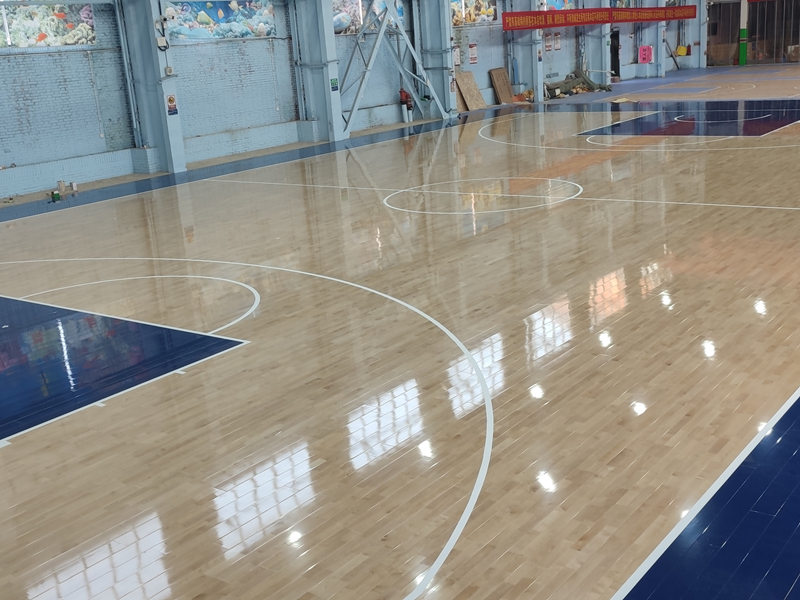
installation determines 60 percent of how well indoor basketball court wood flooring will perform over its lifetime, even if the highest quality wood planks are used. The very first step before any wood is unloaded is to let the planks acclimate to the space for several days, so their internal moisture content adjusts to match the humidity of the basketball hall. Skipping this acclimation period is one of the most common mistakes that leads to gaps, warping, and loose planks within the first year of use. Next, the concrete subfloor must be fully inspected for flatness, because any small bumps or dips in the concrete will transfer through every layer of the system and create uneven spots on the playing surface. Installers will use long straight edges to check every section of the subfloor, and grind down high spots or fill in low spots until the entire base is perfectly level. As the underlayer runners are laid down, they are secured with specialized fasteners that allow for tiny amounts of movement, so the structure can flex slightly under player impact without cracking or pulling loose. The top wood planks are then laid in a specific pattern that runs parallel to the long side of the basketball court, which aligns the grain to distribute the force of players running up and down the court evenly. Every step of this installation process requires careful attention, because even a single misaligned runner or improperly secured plank can create a squeaky spot or a soft patch that disrupts play on the indoor basketball court wood flooring for years.
Installation Best Practices for Indoor Basketball Court Wood Flooring
Leave a Reply