

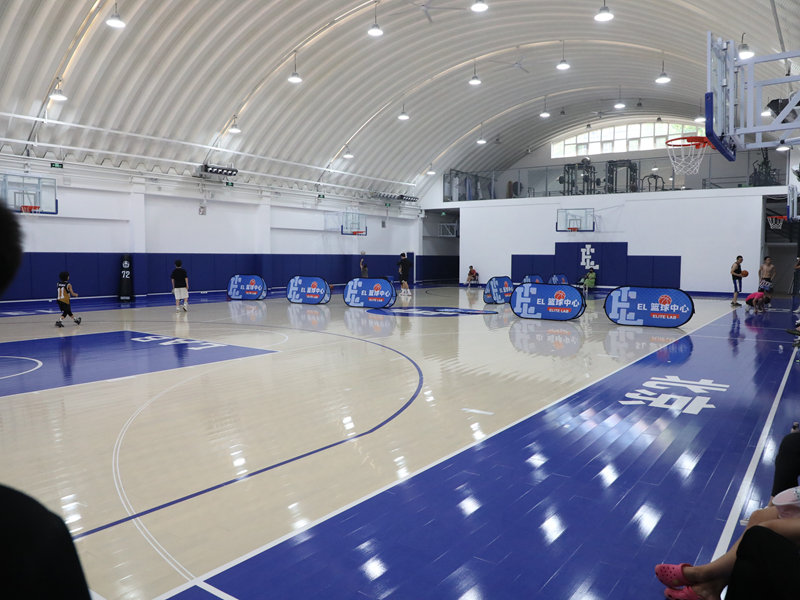
Indoor basketball court wooden flooring is far more than a flat surface for play—it acts as a silent partner in every physical motion an athlete makes during a game. The subtle, controlled elasticity of properly installed wood creates a dynamic feedback loop between the player’s feet and the ground that no rigid surface can replicate. When a guard explodes into a crossover dribble, the wood yields just enough to absorb the initial impact of their push-off, then rebounds with a gentle amount of stored energy that amplifies their forward momentum without feeling artificially springy. This natural response trains players to develop more efficient movement patterns over time, as their bodies learn to sync their muscle activation with the predictable give and return of the wood beneath them. Even small, subtle movements like adjusting stance on defense or shifting weight to catch a pass feel more intuitive on a well-maintained wooden court, because the surface never surprises the athlete with unexpected slippage or unforgiving hardness.
The grain structure of the wood itself plays a quiet but critical role in refining movement mechanics. The tightly packed, consistent grain of high-quality flooring creates a uniform texture across every inch of the court, so a player never has to adjust their stride to account for uneven patches or inconsistent friction. This consistency is especially valuable for young athletes who are still building their fundamental movement habits. When they practice layups, jump shots, and defensive slides on a wooden floor, their muscle memory develops around a reliable, predictable surface that translates perfectly to every other competitive wooden court they will encounter in high school, college, or professional play. Coaches often note that players who grow up training on proper wooden flooring tend to have cleaner, more controlled footwork, because they never develop bad habits to compensate for unpredictable or low-quality surfaces.
Even the way the floor interacts with the air around it contributes to better movement. Unlike non-porous synthetic surfaces that can trap heat and create a sticky, humid microclimate right at foot level, wooden flooring allows for subtle air circulation that keeps the surface temperature consistent and comfortable. This means players’ feet stay drier during intense games, reducing the risk of slipping even when they are sweating heavily. The cumulative effect of all these small properties is a surface that does not fight against the athlete—it works with them, allowing their natural athleticism to shine through without unnecessary barriers or distractions.
Leave a Reply