

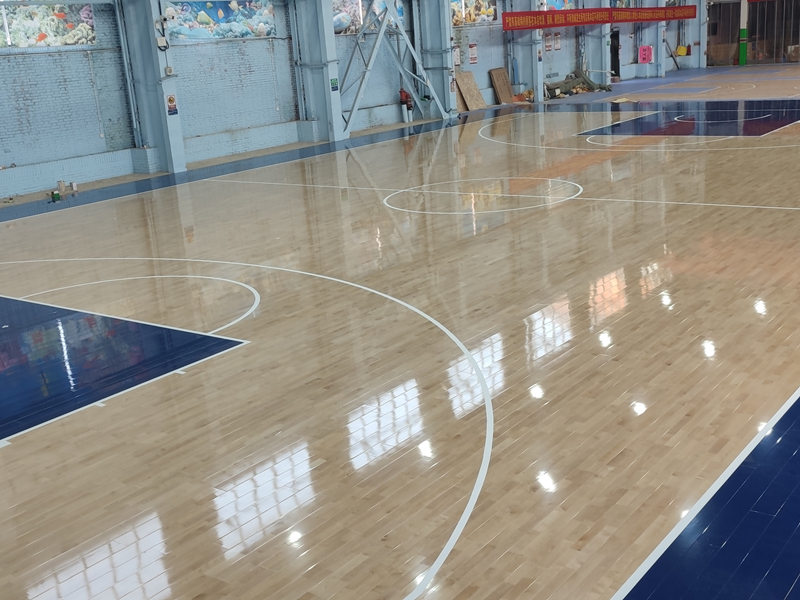
Wood is a natural, living material that responds to changes in its environment, and basketball court wood flooring is no exception. The way it reacts to shifts in humidity and temperature is one of the most important things to understand for anyone who manages or maintains an indoor basketball facility. When the air in the gym is very humid, the wood planks absorb moisture from the air, and they expand slightly in width. When the air is very dry, the wood releases that stored moisture back into the air, and the planks shrink a little bit. These natural movements are not flaws in the floor—they are just part of how solid wood behaves, and a properly installed floor is designed to accommodate these changes without getting damaged.
If these natural movements are not accounted for during installation, problems can start to develop. If there is no room left for the planks to expand when humidity is high, the wood will push up against the walls of the gym or against each other, creating raised, warped spots on the surface that can ruin the smooth playing experience. On the other hand, if the gaps between planks get too large during very dry seasons, dirt and small debris can fall down into the spaces under the floor, and over time that debris can build up and interfere with the floor’s natural ability to flex. That is why experienced installers always leave carefully calculated expansion gaps around the edges of the court, hidden under the baseboards, to give the wood all the room it needs to move safely.
The biggest risk that extreme humidity brings to basketball court wood flooring is cupping, a condition where the edges of each individual plank rise up slightly higher than the center. This happens when the bottom side of the plank absorbs more moisture than the top side, making the bottom expand more than the top. When this happens, the floor no longer has a perfectly smooth, flat surface, and the bounce of the basketball becomes inconsistent. The good news is that cupping is almost always reversible if caught early. If facility managers adjust the gym’s humidity levels back to a stable, moderate range, the planks will slowly even back out on their own, without needing any major repairs.
Extreme dryness, on the other hand, can cause the wood planks to shrink so much that large, noticeable gaps open up between each plank. While these gaps do not usually affect play directly, they can collect dust, sweat, and small bits of rubber from sneaker soles, and over time that buildup can make it harder to keep the floor clean. In very severe cases, extremely dry air can even cause small cracks to form along the grain of the wood. The easiest way to avoid this is to keep the gym’s humidity levels consistent all year round, using humidifiers in the dry winter months and dehumidifiers in the humid summer months, to keep the air at a steady 45 to 55 percent relative humidity.
When managed properly, these natural movements of the wood are not a problem at all. A well cared for basketball court wood floor can go through decades of seasonal humidity and temperature changes, and still stay perfectly smooth, flat, and safe to play on. All it takes is a little bit of awareness of how the wood responds to its environment, and small, consistent adjustments to keep the conditions in the gym stable. That natural responsiveness is part of what makes a wood floor feel so alive and unique, different from every other synthetic surface that never changes at all.
Leave a Reply