

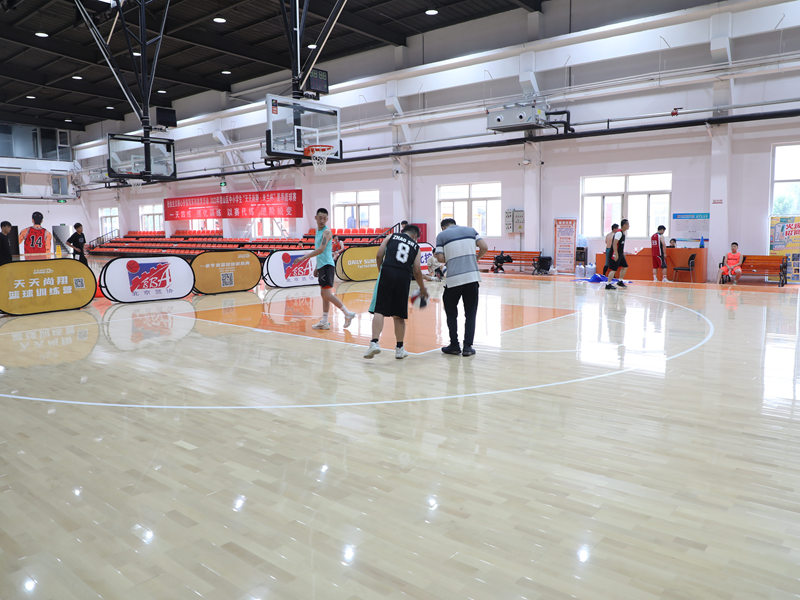
The connection between basketball court wood flooring and long-term athlete joint health is one of the most important, yet often overlooked, benefits of choosing wood for an indoor sports space. Basketball is a high-impact sport by nature, with hundreds of jumps, sprints, and abrupt stops happening over the course of a single game. Each time a player lands after a leap for a rebound, their body absorbs a force several times their own body weight, and that force travels up through their feet, ankles, knees, and hips. Without a surface that can dissipate that force effectively, those repeated impacts add up over months and years of play, leading to chronic joint pain and long-term overuse injuries that can cut an athlete’s career short.
Basketball court wood flooring is engineered specifically to address this problem. The natural resilience of solid wood, combined with the layered subfloor system installed beneath it, creates a controlled amount of shock absorption that takes a significant portion of that impact force away from the athlete’s body. Instead of the full force of a landing being absorbed entirely by the player’s knee cartilage, a large share of that energy is dispersed across the wood planks and the supportive structure under them. This does not mean the floor is soft or mushy to play on—far from it. The level of give is carefully calibrated so that the surface still feels firm and responsive, never slowing a player down or making them feel like they are sinking into the floor when they push off to sprint.
Studies of long-term basketball players have shown consistent patterns of reduced joint pain in groups that regularly play on properly installed wood flooring, compared to groups that play on harder, non-wood surfaces. Many veteran players who have spent decades on the court report that their knees and ankles feel far less sore after a full game when they play on a well-maintained wood floor, compared to the lingering stiffness they experience after playing on other surfaces. Over the course of a 10 or 20 year playing career, that difference adds up to a massive reduction in cumulative stress on the joints, helping athletes stay active in the sport they love for much longer.
This benefit is especially critical for young, developing athletes whose bodies are still growing. Teenage players who are still building bone and cartilage strength are far more vulnerable to impact-related injuries, and the support that quality basketball court wood flooring provides can help them avoid permanent damage that could affect their mobility for the rest of their lives. Many youth sports facilities now prioritize wood flooring specifically for this reason, understanding that protecting young players’ long-term health is just as important as giving them a space to practice their skills.
Even for recreational players who do not compete at a high level, the joint protection offered by wood flooring makes a huge difference. Weekend league players who might only get a few hours of court time a week still put their bodies through the same kinds of high-impact movements, and a good wood floor means they can keep playing well into their 30s, 40s, and beyond, without dealing with the kind of chronic joint pain that forces many people to give up the sport they love.
Leave a Reply