

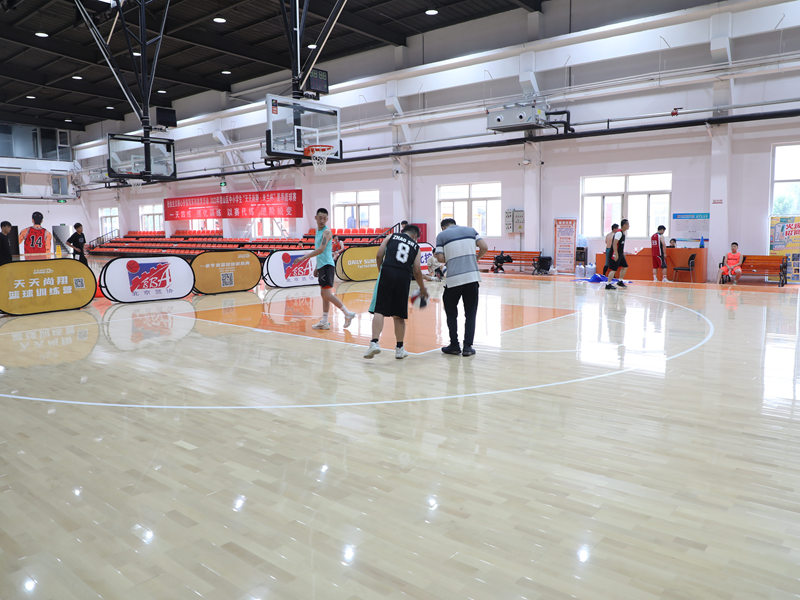
Sustainability is no longer a nice-to-have. It is a must-have for any modern facility. When it comes to indoor basketball court hardwood flooring, the environmental story is largely positive, but it requires conscious choices at every stage.
The most important environmental consideration is the source of the wood. Hardwood for basketball courts should come from sustainably managed forests. Certifications such as those from the Forest Stewardship Council ensure that the wood is harvested in a way that protects biodiversity, respects workers' rights, and maintains the health of the forest ecosystem. When choosing a supplier, always ask about the source of the wood and look for third-party certifications.
Hardwood is a renewable resource. Unlike synthetic materials, which are derived from petroleum and do not biodegrade, hardwood can be regrown. A well-managed forest can produce a continuous supply of hardwood without depleting the resource. This makes hardwood a fundamentally more sustainable choice than most alternatives.
The manufacturing process for hardwood flooring is also relatively low-impact compared to synthetic alternatives. The production of polyurethane finishes does involve chemicals, but modern water-based finishes have significantly reduced the environmental footprint. Many manufacturers now offer low-VOC (volatile organic compound) finishes that are better for indoor air quality.
At the end of its life, hardwood can be repurposed. Old basketball court planks can be milled into furniture, flooring for other areas, or even used as biomass fuel. Synthetic floors, on the other hand, often end up in landfills where they can take hundreds of years to decompose.
The longevity of hardwood also contributes to its environmental profile. A hardwood court that lasts twenty years or more with periodic refinishing has a much lower lifetime environmental impact than a synthetic floor that must be replaced every ten to fifteen years. Fewer replacements mean less waste, less transportation, and less manufacturing.
Energy use is another factor. Hardwood courts require climate control to maintain optimal humidity and temperature. This does consume energy, but the same is true for synthetic courts. The difference is that hardwood does not require the energy-intensive manufacturing processes that synthetic materials do.
The key takeaway is that hardwood basketball court flooring can be a very environmentally responsible choice, provided that the wood is sourced sustainably, the finishes are low-VOC, and the floor is maintained to maximize its lifespan. It is not perfect, but it is far better than most people realize.
Leave a Reply