

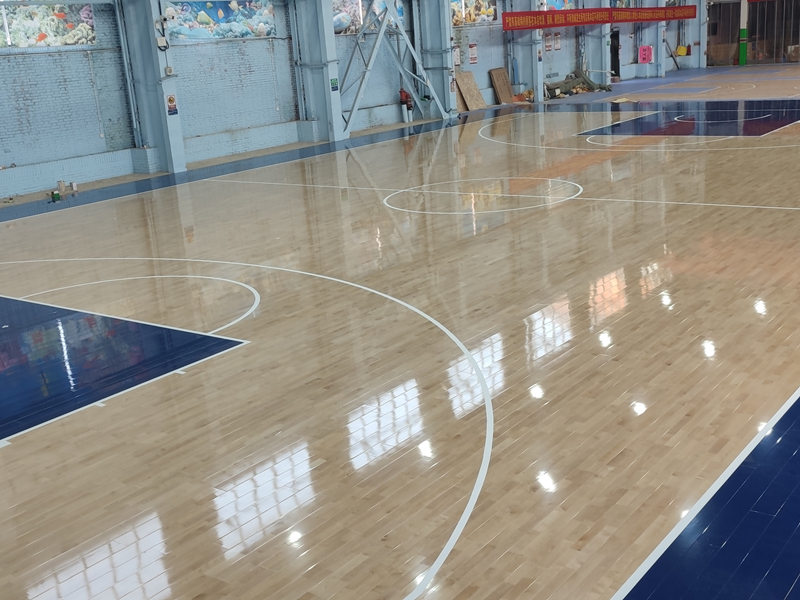
The shift toward advanced printing technology in the production of modular sports wooden flooring has brought with it significant environmental advantages that are transforming how sports facilities approach sustainable construction. Traditional methods of finishing sports wooden flooring involved large volumes of solvent-based coatings that released high levels of volatile organic compounds into the atmosphere during both manufacturing and on-site installation. These materials not only created health concerns for installation workers and venue users but also represented a significant waste of resources, as large portions of the coating material would evaporate into the air rather than remaining on the floor surface. Modern printing technology eliminates most of these environmental concerns by using water-based, low-emission ink formulations that are engineered to deposit almost 100 percent of their material onto the wood substrate, with minimal volatile release during the entire production process.
Another major environmental benefit of printed modular sports wooden flooring is the ability to use more sustainable wood species without sacrificing visual quality. In the past, manufacturers were forced to rely on rare, slow-growing hardwood species that naturally possessed the attractive grain patterns desired for high-end sports facilities. These old-growth forests take centuries to mature, putting significant pressure on natural ecosystems. With modern printing technology, manufacturers can use rapidly renewable, sustainably harvested wood species as the base substrate, then print the appearance of premium hardwood grain patterns onto the surface. This means that sports wooden flooring can deliver the visual character of rare hardwoods while using wood resources that come from well-managed, certified sustainable forestry operations, dramatically reducing the ecological impact of producing high-quality athletic flooring.
The modular nature of these printed sports wooden flooring systems also contributes to their environmental advantages. Because each panel is pre-finished in the factory using precise printing processes, there is no need for the large quantities of finishing materials that would traditionally be brought to the construction site. This eliminates the waste associated with on-site painting projects, where leftover materials often end up in landfills, and reduces the amount of transportation required to move heavy finishing equipment and materials to the venue location. Furthermore, the precise durability of the printed surface means that the flooring requires less frequent refinishing over its lifetime, extending the usable life of the entire sports wooden flooring system and reducing the total volume of materials consumed over decades of operation.
The end-of-life characteristics of printed modular sports wooden flooring also represent an environmental improvement over traditional alternatives. Because the printing materials are formulated to bond strongly but not irreversibly with the wood substrate, the panels can be easily processed at the end of their long service life to separate the wood fibers from the printed surface materials. This allows the wood portion to be fully recycled into new wood products, while the small volume of printed material can be processed through specialized waste recovery systems. The cumulative environmental advantages of modern printing technology make modular sports wooden flooring one of the most sustainable choices available for constructing high-performance athletic surfaces today, aligning perfectly with the global movement toward green building standards for public sports and recreation facilities.
Leave a Reply