

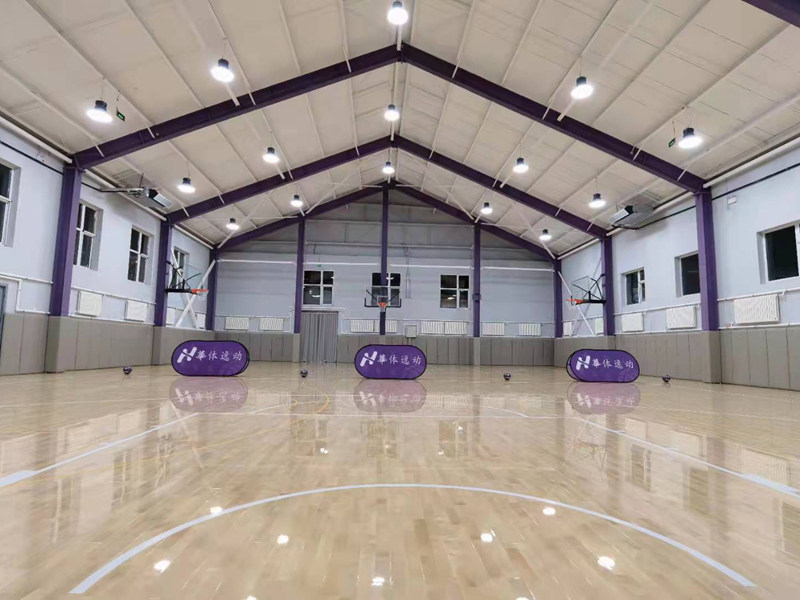
When venue operators choose indoor sports wooden flooring, they usually pay close attention to the long-term cost performance of the product. The printing technology, as an innovative process, its comprehensive cost performance in the entire life cycle of the floor is far higher than that of the traditional sports wooden flooring process.
In the initial production and manufacturing stage, the digital printing process has a higher production efficiency than the traditional manual painting and coloring process. The traditional process needs to go through multiple processes such as manual coloring, color fixing, and repeated painting, which takes a long time and consumes a lot of labor costs. The digital printing process is controlled by a fully automatic system, which can complete the pattern printing of dozens of square meters of floor in a very short time, which greatly shortens the production cycle and reduces the labor cost in the production process. Although the initial equipment investment of the printing process is high, with the large-scale application of the technology, the comprehensive production cost has been controlled at a level close to that of the traditional process.
In the stage of on-site paving and construction, the printed floor does not need to carry out the on-site painting and coloring process like the traditional solid wood floor. After the floor is paved, the surface effect of the pattern can be presented immediately, and there is no need to wait for the paint to dry and cure, which greatly shortens the construction cycle of the venue. For the venue that needs to be put into use quickly, it can save several days of construction time, allowing the venue to open for operation in advance and create income, which virtually reduces the time cost of the venue construction.
In the long-term use stage, the excellent wear resistance and anti-aging performance of the printed pattern greatly reduce the frequency of floor maintenance. The traditional solid wood sports floor usually needs to be sanded and repainted every 3 to 5 years, which requires a lot of manpower and material resources, and the venue needs to be closed for several days during the maintenance period, resulting in a lot of operating losses. The printed floor can maintain the clear and intact pattern effect for more than 10 years under normal use, and there is no need for large-scale sanding and renovation in the middle. The maintenance cost in the entire life cycle is less than 30% of that of the traditional process floor, which greatly reduces the long-term operating cost of the venue.
In addition, the personalized pattern design of the printed floor can also enhance the differentiated competitiveness of the venue. In the same area, the venue with unique printed floor design is easier to be recognized by consumers, attracting more customers to choose to consume here, and the operating income of the venue can be increased by 20% to 30% compared with the ordinary venue. This additional income brought by the visual effect is far more than the slight increase in the initial investment cost of the printing process, making the comprehensive cost performance of the printed sports wooden flooring far ahead of the traditional process products.
Leave a Reply