

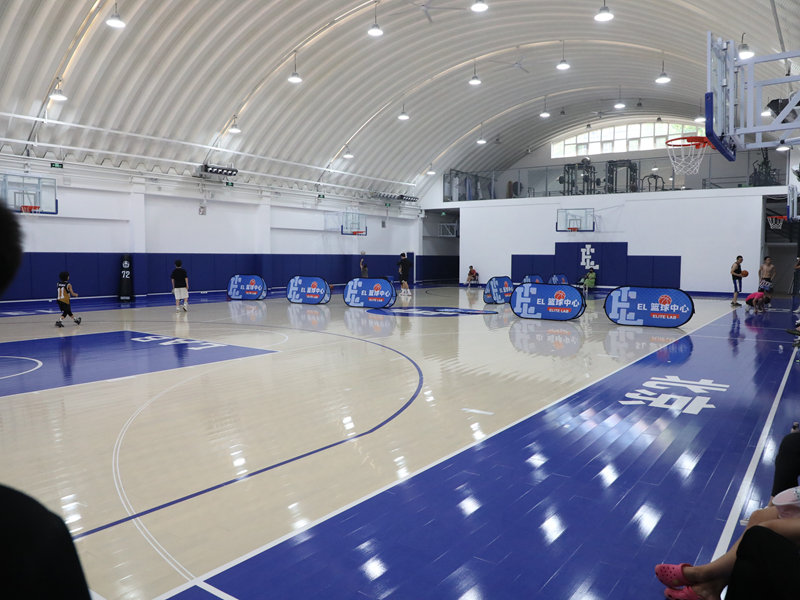
Aesthetics
There is no comparison here. Hardwood is beautiful. The warm tones, the natural grain, the way the light plays off the surface — no synthetic floor can replicate this. Hardwood creates an atmosphere that is unmistakably basketball. It inspires players and impresses spectators.
Synthetic floors, while available in a variety of colors and patterns, always look artificial. They lack the depth and richness of real wood. For facilities that care about appearance — and most do — this is a significant disadvantage.
Cost
Synthetic floors accelerating. The traction provided by the floor is critical for these movements.
If the floor is too slippery, players cannot plant their feet effectively, leading to poor acceleration and an increased risk of ankle sprains. If the floor is too grippy, players' feet may stick to the surface during rapid direction changes, putting excessive stress on the knees and ankles.
Hardwood provides the optimal traction for basketball. The surface allows players to make quick, explosive cuts without slipping, while also allowing their feet to release cleanly when they change direction. This is why hardwood is specified by every major basketball organization in the world.
Shock Absorption and Joint Health
Basketball is a high-impact sport. Every jump, every landing, every sudden stop sends shock waves through the player's body, particularly the knees, ankles, and spine. The floor plays a significant role in absorbing or transmitting these forces.
A properly installed hardwood floor with a quality underlayment system can reduce impact forces by 30 to 50 percent compared to a bare concrete surface. The wood itself has natural shock-absorbing properties, and the underlayment adds an additional layer of cushioning.
Synthetic floors vary in their shock absorption. Some, particularly poured polyurethane systems, offer good cushioning. Others, especially thin modular tiles, can be quite hard and transmit more impact force to the player's joints.
Over the course of a season, the cumulative effect of impact forces can lead to overuse injuries such as patellar tendinitis, shin splints, and stress fractures. A floor with good shock absorption can significantly reduce the incidence of these injuries.
**Surface Consistency and Injury total above $100,000 for a single court.
Here is a rough breakdown of the cost components:
Hardwood material: 30 to 40 percent of total cost. Premium maple is more expensive than oak or birch.
Subfloor preparation: 15 to 20 percent. If the existing subfloor needs significant leveling or moisture mitigation, this cost can increase substantially.
Underlayment and shock pads: 10 to 15 percent.
Installation labor: 20 to 25 percent. Skilled installers are not cheap, and basketball court installation requires specialized expertise.
Sanding and finishing: 10 to 15 percent.
Line painting and accessories: 5 to 10 percent.
Leave a Reply