

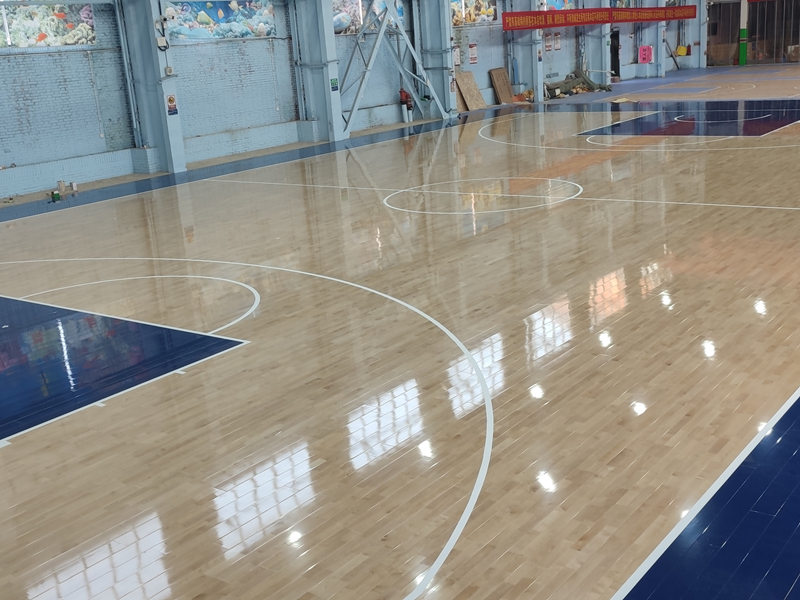
A high-quality basketball court wood flooring project is far more than just producing good planks—it covers every link from initial design consultation, raw material production, on-site installation, to long-term after-sales maintenance. Naibu has built a complete full-industrial-chain service system that covers every stage of a venue’s lifecycle, ensuring that customers do not have to deal with multiple suppliers or worry about disjointed services. This integrated model is one of the brand’s greatest strengths, and it is the reason why thousands of venue operators choose Naibu for their basketball court projects.
The process usually starts with a professional pre-sales consultation. Naibu’s experienced engineers visit the venue site to measure the space, check the condition of the base ground, and communicate with the customer about their specific needs—whether it is for a professional FIBA-level competition venue, a school’s daily training gym, a commercial fitness center, or a community public sports space. Based on these details, the team provides a personalized flooring solution that matches the venue’s positioning, budget, and usage frequency. Unlike one-size-fits-all products, Naibu’s customized solutions ensure that every customer gets the most suitable basketball court wood flooring system for their unique situation.
After the design is confirmed, Naibu arranges production in its self-operated factory, strictly controlling every process to guarantee product quality. Then, the brand’s directly managed construction teams across the country take over the on-site installation work. These teams have years of experience in sports flooring installation, following a set of scientific, time-tested construction procedures and using professional equipment to ensure that every plank is laid flat, tightly spliced, and perfectly aligned. This full-chain control from production to installation eliminates the common problems that occur when separate suppliers handle different stages, such as mismatched materials, uneven installation, and unclear responsibility for quality issues.
Leave a Reply