

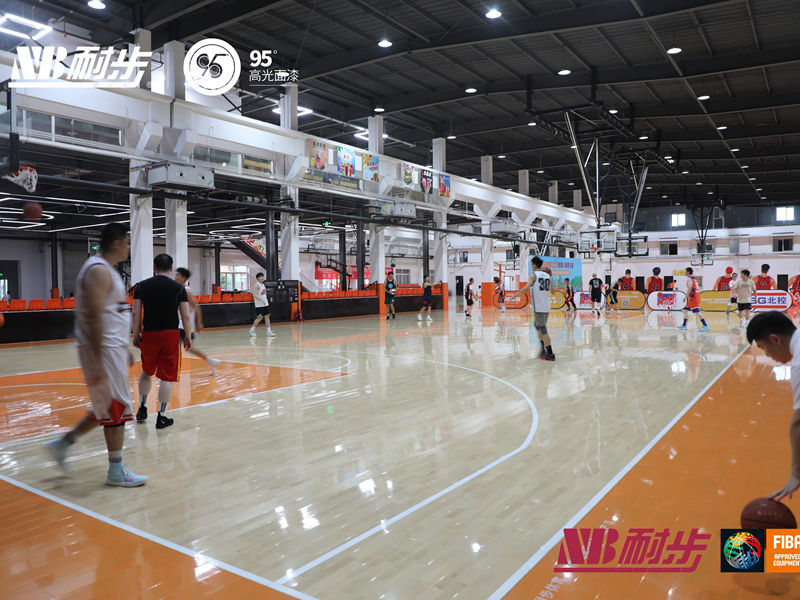
There are several types of materials used for indoor sports flooring, each with its unique set of characteristics and advantages. Understanding these materials can help facility owners and managers make informed decisions when selecting the most suitable flooring for their specific needs.
Wood Flooring: Wood is a classic choice for indoor sports flooring, especially in basketball and volleyball courts. Hardwoods like maple and oak are commonly used due to their durability, strength, and excellent shock absorption properties. Wood floors offer a natural and warm aesthetic, and they can be refinished multiple times to restore their original appearance. However, wood flooring requires regular maintenance, including sanding, sealing, and cleaning, to prevent damage from moisture and wear.
Synthetic Flooring: Synthetic materials such as polyurethane (PU), vinyl, and rubber are increasingly popular for indoor sports flooring. PU floors are known for their high durability, excellent shock absorption, and good traction. They are also resistant to scratches and stains, making them easy to maintain. Vinyl floors are cost-effective and offer a wide range of design options, including realistic wood grain patterns. Rubber floors are highly shock-absorbent and provide excellent cushioning, making them ideal for areas where high-impact activities take place, such as weightlifting rooms or gymnastics facilities.
Composite Flooring: Composite flooring combines the benefits of different materials to create a versatile and high-performance sports surface. For example, some composite floors feature a wood core with a synthetic top layer, offering the natural look and feel of wood while providing enhanced durability and resistance to moisture. Composite floors are often used in multi-purpose sports facilities where different sports activities are conducted on the same surface.
In conclusion, the choice of indoor sports flooring material depends on various factors, including the type of sports activities, budget, maintenance requirements, and aesthetic preferences. Facility owners should carefully evaluate these factors to select the most appropriate flooring material that meets their specific needs and provides the best value for their investment.
Leave a Reply