

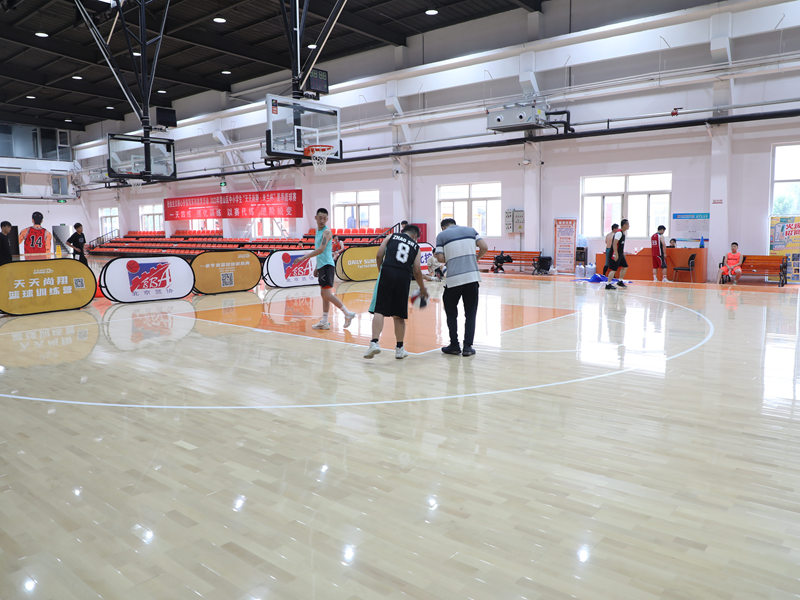
Wooden flooring offers a high degree of versatility in indoor basketball court design, allowing architects and designers to create unique and functional spaces that meet the specific needs of their clients.
One of the primary advantages of wooden flooring is its ability to be customized to fit various court sizes and shapes. Whether it's a full-size NBA court or a smaller recreational court, wooden flooring can be tailored to match the dimensions and layout requirements. This flexibility ensures that the court is optimized for the intended use, whether it's for competitive games, training sessions, or casual play.
Additionally, wooden flooring can be finished in a variety of colors and patterns. This allows designers to create visually appealing courts that reflect the branding or theme of the facility. For example, a school basketball court might feature the school's colors and logo, while a professional arena might incorporate team colors and mascots. These custom finishes not only enhance the aesthetic appeal of the court but also create a sense of identity and pride for the users.
Moreover, wooden flooring can be combined with other materials to create multi-functional spaces. For instance, a basketball court might also serve as a volleyball court or a concert venue. By using modular wooden panels that can be easily reconfigured, designers can create a versatile space that accommodates multiple activities. This maximizes the use of the facility and enhances its overall value.
In conclusion, the versatility of wooden flooring in indoor basketball court design is undeniable. Its ability to be customized, finished in various colors and patterns, and combined with other materials makes it an ideal choice for creating unique and functional spaces that meet the diverse needs of basketball enthusiasts.
Leave a Reply