

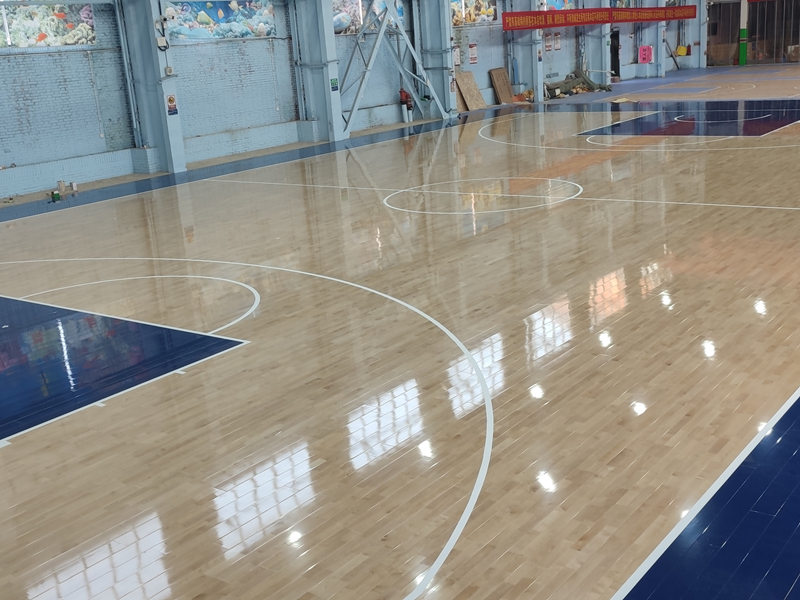
The design of sports wood flooring is deeply rooted in biomechanics, the study of how the human body moves and interacts with its environment. By understanding the forces and stresses exerted during athletic activities, engineers can create flooring that optimizes performance and safety.
When an athlete jumps, for example, their body generates significant impact forces upon landing. A hard surface like concrete would transmit these forces directly to the joints, increasing the risk of injury. Sports wood flooring, however, absorbs and distributes these forces through its multi-layered structure, reducing peak impact loads by up to 70%. This is achieved through a combination of shock-absorbing subfloors and resilient wood layers that flex slightly under pressure.
The floor’s grip is another biomechanical consideration. Too much friction can restrict movement and increase the risk of strains, while too little can lead to slips and falls. Wood flooring is engineered to provide the perfect balance, allowing athletes to pivot, cut, and accelerate smoothly without compromising stability.
Additionally, the floor’s resilience affects energy return. A well-designed wood floor stores some of the energy from an athlete’s movement and returns it, enhancing their performance. This is particularly noticeable in sports like basketball, where players experience a more responsive bounce compared to harder surfaces.
Leave a Reply