

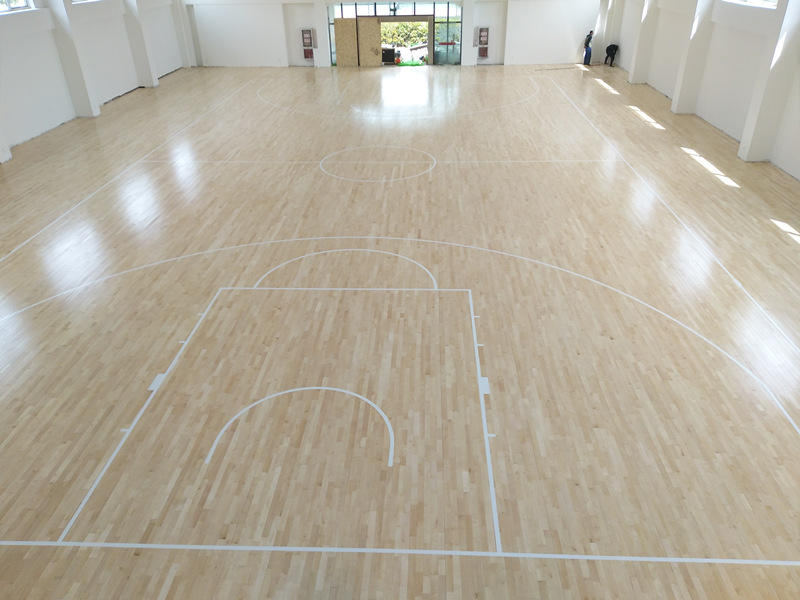
The science behind sports wood flooring is fascinating and plays a crucial role in enhancing athletic performance. At its core, sports wood flooring is designed to provide a stable, responsive surface that absorbs shock and distributes forces evenly. This is achieved through a combination of advanced materials and engineering techniques.
One key aspect of sports wood flooring is its shock-absorbing properties. When an athlete jumps or lands on the floor, the impact forces are absorbed by the floor's substructure, which consists of layers of wood and shock-absorbing materials. This helps to reduce the strain on the athlete's joints and muscles, allowing them to perform more explosively and with less risk of injury.
Another important feature of sports wood flooring is its traction. The surface of the floor is designed to provide optimal grip, preventing athletes from slipping or losing their footing during high-speed movements. This is achieved through the use of specialized finishes and textures that enhance the floor's friction coefficient.
Additionally, sports wood flooring is engineered to be dimensionally stable, meaning it resists warping or shrinking due to changes in temperature or humidity. This ensures that the floor maintains its flatness and uniformity over time, providing a consistent playing surface for athletes.
In conclusion, the science behind sports wood flooring is a testament to the importance of engineering and materials science in sports performance. By providing a stable, shock-absorbing, and traction-enhancing surface, sports wood flooring helps athletes to perform at their best while reducing the risk of injury.
Leave a Reply