

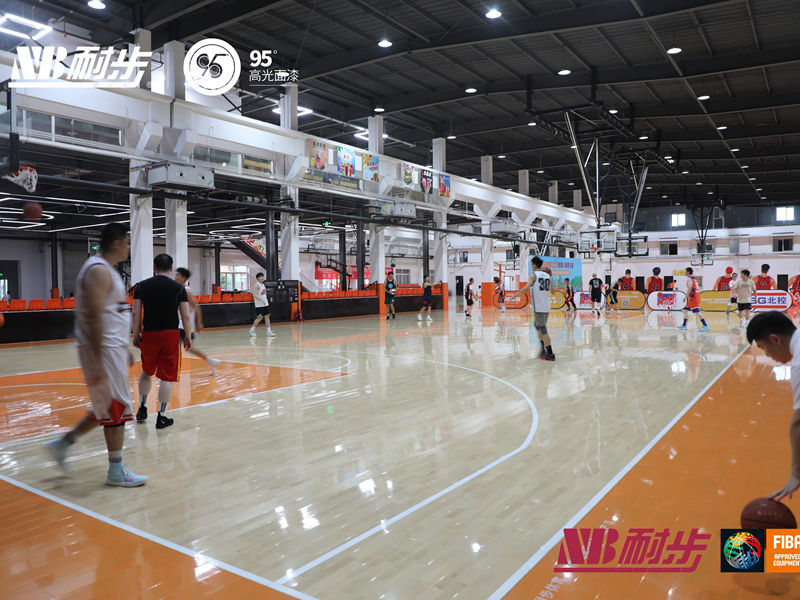
Sports wood flooring is not just a pretty face; it is a scientifically engineered surface that plays a crucial role in enhancing athletic performance. The design and construction of sports wood flooring are based on principles of biomechanics, material science, and engineering, all aimed at creating a floor that optimizes the interaction between athletes and the playing surface.
One of the key scientific aspects of sports wood flooring is its shock absorption capability. When an athlete jumps, runs, or lands on the floor, the impact forces generated can be significant. If these forces are not properly absorbed, they can lead to injuries such as shin splints, stress fractures, and joint pain. Sports wood flooring is designed to absorb and distribute these forces evenly, reducing the stress on the athlete's body and minimizing the risk of injury.
Another important scientific consideration is the floor's resilience. Resilience refers to the floor's ability to return to its original shape after being deformed by an impact. A highly resilient floor will provide a consistent and predictable playing surface, allowing athletes to perform with confidence. Sports wood flooring achieves this through its multi-layer construction, which includes an intermediate layer specifically designed for shock absorption and resilience.
The surface texture of sports wood flooring also plays a role in athletic performance. A floor that is too smooth can be slippery, increasing the risk of slips and falls. Conversely, a floor that is too rough can impede movement and reduce traction. Sports wood flooring strikes a balance between these two extremes, providing a surface that is both slip-resistant and easy to move on. This is achieved through careful selection of the wood species and finish, as well as through the use of specialized coatings and treatments.
Furthermore, sports wood flooring is designed to enhance ball bounce. In sports such as basketball, the bounce of the ball is critical to the flow of the game. A floor that provides a consistent and predictable ball bounce allows players to anticipate and react to the ball's movement more effectively. Sports wood flooring achieves this through its uniform construction and high-quality materials, which ensure that the ball bounces consistently across the entire playing surface.
In conclusion, the science behind sports wood flooring is complex and multifaceted. From shock absorption and resilience to surface texture and ball bounce, every aspect of the floor's design is carefully considered to optimize athletic performance. By understanding and applying these scientific principles, sports wood flooring manufacturers are able to create floors that not only look great but also enhance the safety and performance of athletes.
Leave a Reply