

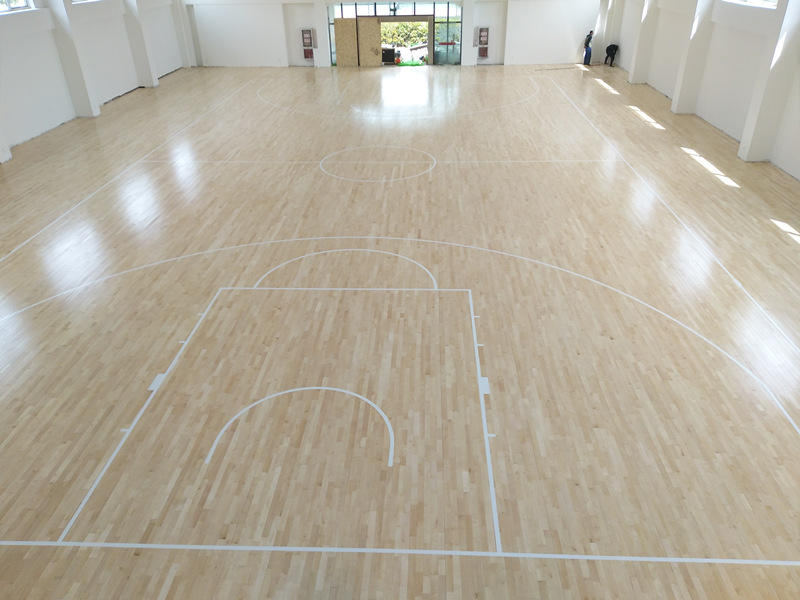
The design of sports wood flooring is a complex process that involves a deep understanding of materials science, engineering principles, and the specific needs of athletes. The science behind sports wood flooring design ensures that the floor not only looks good but also performs at its best under the rigors of competitive sports.
At the heart of sports wood flooring design is the selection of materials. Hard maple is the most commonly used wood for the top layer, or wear layer, due to its durability, hardness, and resistance to wear and tear. The subfloor system, which lies beneath the wear layer, is equally important and is typically constructed using a combination of shock-absorbing pads or springs and a sturdy support structure. This combination helps to distribute the impact of jumps and landings evenly across the floor, reducing stress on athletes' joints and muscles.
Another key aspect of sports wood flooring design is the consideration of floor geometry. The shape and size of the floor panels, as well as the spacing between them, can have a significant impact on the floor's performance. For example, larger panels may provide better stability and support, while smaller panels may offer more flexibility and responsiveness. The spacing between panels is also crucial, as it affects the floor's ability to absorb shock and distribute impact forces.
In addition to materials and geometry, sports wood flooring design also takes into account the specific needs of different sports. For example, basketball floors need to provide optimal traction for quick starts and stops, while volleyball floors need to be more forgiving to reduce the risk of injuries from jumps and landings. By tailoring the design to the specific requirements of each sport, sports wood floors can provide the best possible performance and safety for athletes.
In conclusion, the science behind sports wood flooring design is a multifaceted process that involves careful consideration of materials, geometry, and the specific needs of athletes. By applying these principles, designers can create sports wood floors that are not only visually appealing but also perform at their best under the demands of competitive sports.
Leave a Reply